Introduction
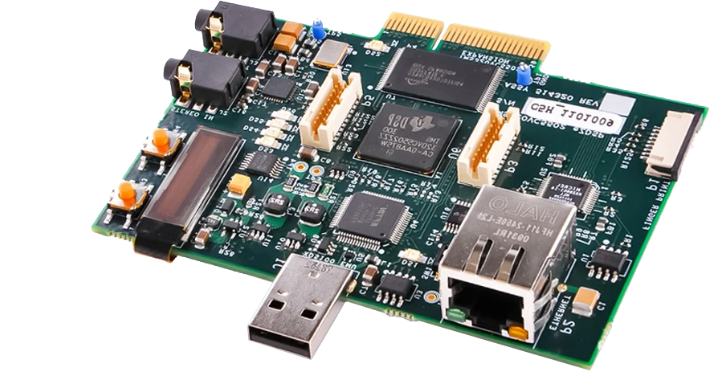
The electronics industry is evolving quickly, and engineers now need faster and more reliable ways to develop new products. This is where fast pcb prototyping plays an important role, helping teams test ideas without long delays. Modern businesses depend on fast turn pcb assembly services to reduce development time while maintaining strong performance and product quality. At platforms like Fast Turn PCBs, the focus is on combining speed with precision so that innovation does not slow down due to manufacturing limits.
In today’s competitive market, even a small delay in PCB fabrication can affect product launches and business growth. That is why advanced methods such as rapid PCB fabrication, surface mount technology, and smart design validation are becoming standard practices. Services like bga pcb assembly are also critical because modern electronics rely on compact and high-density circuit designs. By improving turnaround time and maintaining accuracy, companies can bring better electronic products to market faster.
The Role of Rapid Prototyping in Modern Electronics Development
Rapid PCB prototyping has become a core part of modern electronics engineering because it allows designers to test circuits early in the development cycle. Instead of waiting weeks for traditional manufacturing, engineers can now use fast turn pcb assembly to quickly build and evaluate functional prototypes. This helps reduce risks, identify design issues early, and improve overall product quality before mass production begins.
Another key benefit of rapid prototyping is flexibility in design changes. Engineers can adjust layouts, modify component placement, and test different configurations without major delays. This is especially important in industries where innovation moves quickly, such as consumer electronics, automotive systems, and IoT devices. With services like bga pcb assembly, even complex chip designs can be integrated efficiently into prototype boards, ensuring better signal integrity and performance testing at early stages.
Advancements in BGA PCB Assembly Techniques for High-Density Designs
One of the most important developments in modern PCB manufacturing is the improvement in bga pcb assembly techniques. Ball Grid Array (BGA) components are widely used in advanced electronics because they offer higher pin density and better electrical performance. However, assembling these components requires precision equipment and controlled processes to ensure proper soldering and alignment on multilayer boards.
Modern manufacturing facilities now use automated optical inspection and X-ray technology to ensure accuracy in bga pcb assembly. This helps detect hidden solder issues that cannot be seen with standard inspection methods. When combined with fast turn pcb assembly services, engineers can quickly verify complex designs and make improvements without long production delays. This combination of speed and precision is essential for industries that rely on high-performance computing and compact device design.
How Fast Turn PCB Assembly Improves Product Development Cycles
Fast turn pcb assembly has significantly changed the way electronic products are developed and launched. By reducing lead times from weeks to just days, engineers can test multiple design iterations in a short period. This helps companies stay competitive and respond quickly to market demands without sacrificing quality or reliability in their PCB fabrication process.
Another advantage of fast turn pcb assembly is improved collaboration between design and manufacturing teams. When prototypes are delivered quickly, engineers can immediately test functionality, check signal integrity, and adjust circuit layouts if needed. This faster feedback loop leads to better design decisions and reduces the risk of costly errors in mass production. It also supports advanced techniques like bga pcb assembly, which require careful validation during early stages of development.
Design Considerations for High-Performance PCB Prototypes
Designing a high-performance PCB prototype requires careful attention to detail, especially when dealing with high-speed signals and dense component layouts. Engineers must consider factors such as trace routing, impedance control, and thermal management to ensure reliable operation. In fast pcb prototyping, these design elements become even more important because any mistake can be quickly tested and corrected in the next iteration.
Another key consideration is material selection and layer stack-up design. Multilayer boards are commonly used in modern electronics to support complex circuits and improve signal performance. When using fast turn pcb assembly services, designers must ensure that their layouts are optimized for manufacturing efficiency while still meeting electrical requirements. This balance is especially important in projects involving bga pcb assembly, where precision and stability are critical for long-term product reliability.
Quality Assurance and Testing in Fast PCB Manufacturing
Quality assurance is a critical part of fast pcb prototyping and ensures that every board meets strict performance standards before it is used in real applications. Manufacturers use automated testing methods, including in-circuit testing and functional testing, to verify that each component works correctly. These processes help detect defects early and maintain consistency across all production batches.
In addition to testing, inspection technologies such as X-ray analysis and automated optical inspection play a major role in ensuring quality, especially in bga pcb assembly. These methods help identify hidden issues like solder voids or misaligned components that could affect performance. When combined with fast turn pcb assembly workflows, quality control ensures that speed does not compromise reliability, allowing engineers to trust their prototypes for real-world testing and validation.
Conclusion
The future of electronics depends heavily on fast pcb prototyping and the ability to move from concept to product quickly. With the help of advanced manufacturing techniques like bga pcb assembly and efficient fast turn pcb assembly services, engineers can now design, test, and improve circuits at a much faster pace than before. This improves innovation while reducing risks and development costs.
As technology continues to evolve, companies that adopt rapid PCB fabrication methods will have a clear advantage in the market. Platforms like Fast Turn PCBs play an important role in supporting this shift by offering reliable, high-quality, and fast production solutions. By combining speed, precision, and strong engineering practices, modern PCB prototyping is helping shape the future of electronics in a more efficient and intelligent way.
Visit FastTurnPCBs.com for fast, reliable PCB and PCBA manufacturing. From rapid prototypes to full production, we deliver quality circuit solutions to help you bring your electronics to market quickly.