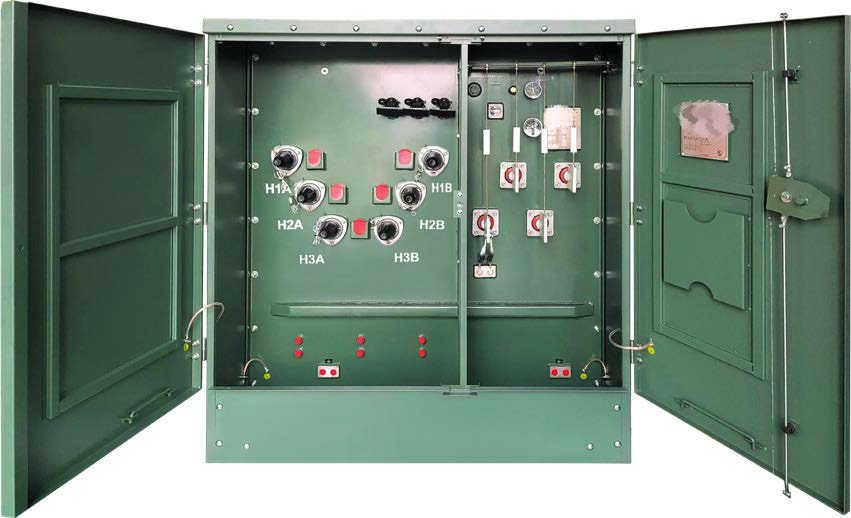
The evolution of electrical power systems has seen a dramatic shift from traditional, centralized distribution models to highly intelligent, interconnected smart grid networks. A critical component in this transformation is the 3 phase pad-mounted transformer. These transformers, widely used in residential, commercial, and industrial underground distribution systems, are now being integrated with advanced smart grid technologies to optimize energy efficiency, enhance reliability, and enable real-time monitoring and control.
This article explores the integration of three-phase pad-mounted transformers into smart grid networks, detailing their role, benefits, technological requirements, performance optimization strategies, and future prospects.
Understanding 3 Phase Pad Mount Transformers
3 phase pad-mount transformers are low- to medium-voltage distribution transformers designed for ground-level installation in secure, weatherproof enclosures. They are primarily used to step down medium voltage from the distribution system to low-voltage levels suitable for end-users.
Key Components
A typical three-phase pad-mounted transformer includes:
- Core and Windings: Facilitate efficient voltage transformation while minimizing losses.
- Pad-Mounted Enclosure: A tamper-resistant, weatherproof housing that ensures safety and protects internal components.
- High and Low Voltage Bushings: Provide safe electrical connections to distribution networks and downstream circuits.
- Protective Devices: Such as fuses, surge arresters, and grounding systems, protect against electrical faults and transient voltages.
- Grounding System: Ensures fault currents are safely directed into the earth to prevent hazards.
Functionality
Three-phase pad-mounted transformers operate using electromagnetic induction. They provide balanced three-phase power, support multiple distribution circuits, and maintain voltage stability across connected loads. Their enclosed design and durable construction make them suitable for urban, suburban, and industrial environments.
The Role of Pad-Mounted Transformers in Smart Grids
Smart grids represent the modernization of electrical distribution networks, combining traditional infrastructure with digital communication and automation technologies. Three-phase pad-mounted transformers play a crucial role in these networks:
Power Distribution and Load Management
Transformers act as critical nodes within the smart grid, delivering electricity from medium-voltage distribution feeders to low-voltage end users. Integrated with smart devices, they provide real-time data on load conditions, enabling utilities to balance demand and prevent overloading.
Real-Time Monitoring and Data Collection
When equipped with sensors and smart monitoring systems, pad-mounted transformers can track:
- Voltage and current levels
- Power factor and harmonic distortions
- Load fluctuations
- Temperature and environmental conditions
This data helps utilities make informed decisions on energy distribution, preventive maintenance, and fault management.
Integration with Renewable Energy
Smart grids increasingly incorporate distributed renewable energy sources such as solar panels and wind turbines. Three-phase pad-mounted transformers can manage variable energy inputs, allowing smooth integration of these intermittent sources into the grid.
Fault Detection and Self-Healing
By interfacing with smart grid communication networks, pad-mounted transformers can detect faults, send alerts to control centers, and support automated reconfiguration of the network to restore power quickly. This self-healing capability significantly enhances reliability and reduces downtime.
Technological Requirements for Integration
Integrating pad-mounted transformers into a smart grid requires additional hardware and software to enable real-time monitoring, communication, and automation.
Sensors and Instrumentation
- Current and Voltage Sensors: Measure load and voltage levels in real time.
- Temperature Sensors: Detect overheating, preventing insulation degradation and failures.
- Harmonic Analyzers: Monitor power quality to detect distortions caused by nonlinear loads.
Communication Interfaces
Smart transformers require robust communication protocols to transmit data to utility control centers:
- IoT-Enabled Communication: Using protocols such as Modbus, DNP3, or IEC 61850 for remote monitoring and control.
- Wireless and Fiber Optic Connectivity: Ensures rapid and reliable transmission of critical data.
- Integration with SCADA Systems: Supervisory control and data acquisition systems facilitate centralized monitoring and control.
Control and Automation Software
- Energy Management Systems (EMS): Analyze transformer performance and optimize load distribution.
- Predictive Maintenance Tools: Use historical and real-time data to forecast potential failures.
- Automated Load Balancing: Dynamically reallocates power to prevent overload and voltage instability.
Performance Optimization Strategies
To maximize the benefits of integrating pad-mounted transformers into smart grids, several optimization strategies can be implemented:
Load Balancing and Demand Response
Smart transformers can monitor load across three phases and redistribute energy as needed, preventing overloading and improving efficiency. Utilities can also implement demand response strategies to shift or reduce consumption during peak periods.
Predictive Maintenance
Data from sensors and smart monitoring allows utilities to identify early signs of equipment wear or failure. By performing maintenance proactively, operators can reduce unplanned outages and extend transformer lifespan.
Voltage Regulation and Harmonic Control
Smart pad-mounted transformers help maintain consistent voltage levels, reducing the impact of voltage sags or surges. Harmonic monitoring ensures that nonlinear loads do not compromise power quality or damage connected equipment.
Integration with Distributed Energy Resources (DERs)
Smart transformers facilitate the integration of rooftop solar panels, wind turbines, and battery storage systems. They manage bidirectional power flow and ensure that renewable energy is efficiently utilized without destabilizing the grid.
Automated Fault Management
By detecting and isolating faults in real time, smart transformers prevent the spread of outages and allow faster network restoration. This reduces downtime for customers and minimizes economic losses.
Benefits of Integration
Integrating three-phase pad-mounted transformers into smart grids offers multiple advantages for utilities and consumers:
Enhanced Reliability
- Reduced outages through automated fault detection and self-healing capabilities.
- Balanced loads prevent overloading and equipment failures.
Energy Efficiency
- Optimized load distribution reduces energy losses.
- Real-time monitoring allows utilities to adjust operations for peak efficiency.
Safety Improvements
- Early detection of overheating or faults minimizes risks of fire or electrical hazards.
- Grounding and protective systems ensure personnel and public safety.
Support for Renewable Energy
- Seamless integration of solar, wind, and storage systems into the distribution network.
- Efficient management of variable energy inputs enhances grid resilience.
Data-Driven Decision Making
- Real-time analytics allow predictive maintenance, improved planning, and operational efficiency.
- Utilities can make informed investments in infrastructure upgrades and capacity expansion.
Conclusion
Three-phase pad-mounted transformers are no longer just passive distribution equipment; they are key enablers of smart grid functionality. By integrating sensors, communication systems, and advanced analytics, these transformers provide real-time monitoring, fault detection, and load management, all of which are essential for the efficient operation of modern power networks.
The integration of pad-mounted transformers into smart grids enhances reliability, energy efficiency, safety, and sustainability. It allows utilities to optimize load distribution, reduce operational costs, and facilitate the adoption of renewable energy sources. With proper installation, monitoring, and maintenance, smart pad-mounted transformers play a central role in building resilient and efficient electrical distribution networks capable of meeting the demands of the 21st-century energy landscape.
Investing in smart pad-mounted transformer technologies represents a strategic approach for utilities seeking to modernize their infrastructure, improve operational performance, and deliver reliable, safe, and efficient power to their customers.