Manually copying and pasting captions at 2 AM while staring at a chaotic spreadsheet makes you feel like a glorified robot. We have all suffered through that soul-crushing grind, desperately trying to keep up with the relentless demands of modern digital marketing. For anyone striving to scale a home-based operation, this endless content treadmill completely drains your creative energy. You cannot outwork the algorithm, so you must outsmart it using powerful asynchronous strategies. The key to unlocking this operational freedom is Agentic AI. By wiring brilliant reasoning models directly into the linkedin data api, instagram api, youtube api, tik tok api, you construct an autonomous empire that never sleeps.

1. The Anatomy of an Agentic Workflow: Moving Beyond Simple Bots
Basic automation feels like duct-taping a leaky pipe; one tiny change in the platform, and the whole script shatters. Traditional bots are incredibly fragile because they lack context and blindly follow rigid rules. We are now entering an era where your software actually perceives the nuance of your social media content.
Agentic AI operates entirely differently. These intelligent digital workers evaluate unstructured data, formulate multi-step plans, and adapt to errors on the fly. To make these decisions, an AI agent relies entirely on the quality of its tools. The true magic happens when you hand your LLM the keys to crucial social platform endpoints. Suddenly, your solo home-based business wields the cross-platform execution power of a massive enterprise agency.
2. Navigating the Core Social Media APIs for AI Integration
Connecting an intelligent brain to the internet requires understanding the specific plumbing of each digital ecosystem. You must navigate unique rate limits, authentication hurdles, and data structures to master these API integrations.
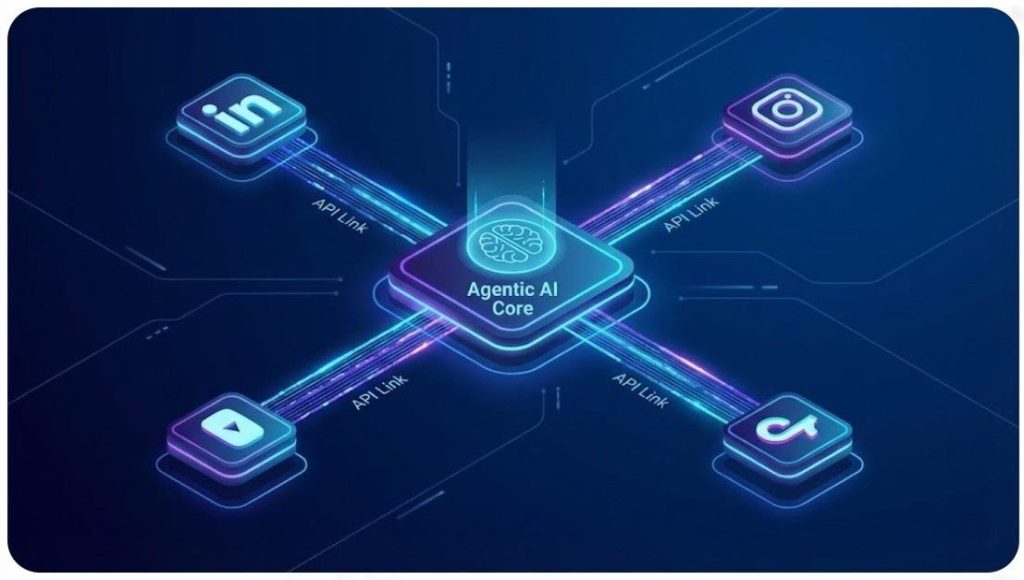
- The Professional Graph: Mastering B2B growth requires tapping into the LinkedIn Data API. Developers must carefully manage strict OAuth 2.0 flows to ensure their agents can autonomously research industry trends and draft hyper-personalized corporate posts.
- The Visual & Engagement Hub: Navigating Meta’s walled garden is notorious for causing developers to pull their hair out, but the Instagram API is absolutely essential. By securing the right webhook connections, your AI can monitor sentiment in the comments and dynamically adjust your social media automation.
- The Search & Video Engine: Google’s video giant operates on a brutal quota system, making efficiency the golden rule for the YouTube API. An advanced agent can scrape video transcripts to pinpoint high-ranking SEO keywords, ultimately automating your short-form uploads for maximum discoverability.
- The Viral Catalyst: Capturing lightning in a bottle requires the blazing speed of the TikTok API. Because audio trends die in a matter of hours, your autonomous engine uses this endpoint to push pre-edited drafts instantly, capturing the viral wave before it crashes.
When you perfectly orchestrate the linkedin data api, instagram api, youtube api, tik tok api, you transform isolated platforms into a unified content syndication network.
3. Building the Bridge: Tools, Frameworks, and Authentication
You cannot simply ask a language model to post a video and expect a miracle. You have to build a robust framework that grants your AI secure, continuous access to these social media APIs.
Orchestration frameworks like LangChain or n8n act as the central nervous system for your automation agents. The most terrifying hurdle for any developer in this space is managing authentication. If your OAuth access tokens expire while you are sleeping, your entire asynchronous workflow collapses. You must engineer your pipeline to refresh these security tokens proactively, ensuring your digital workers never hit a locked door. Furthermore, you must equip your system with a persistent database, giving your AI the crucial “memory” it needs to learn from past analytical triumphs.
4. Actionable Insights: Designing a Cross-Platform Content Agent
Diving into this architecture feels overwhelming, but you can conquer it by building one node at a time. To protect your brand reputation, you must design your system with strategic guardrails.
- Step 1: The Research Node: Program your agent to listen before it speaks. Use your API integration to scrape trending hashtags and summarize the current digital conversation.
- Step 2: The Creation Node: Funnel that research into your LLM to generate platform-specific variations. The system should draft a highly technical breakdown for LinkedIn, while simultaneously cutting a punchy, fast-paced hook for a TikTok draft.
- Step 3: The “Human-in-the-Loop” Safeguard: Never let a new AI run completely unsupervised in the wild. Configure the social media APIs to save everything as a draft, allowing you to review the machine’s logic before pushing anything live.
Reclaiming Your Engineering and Creative Bandwidth

Wasting your unique human intellect on repetitive manual uploads is a tragic misuse of your time. The future belongs to builders who leverage intelligent systems to shatter operational bottlenecks. By boldly integrating the linkedin data api, instagram api, youtube api, tik tok api, you transition from a frantic content creator into a masterful digital architect. Start small, automate one single bottleneck this weekend, and watch as your autonomous engine completely redefines your ultimate growth trajectory.


