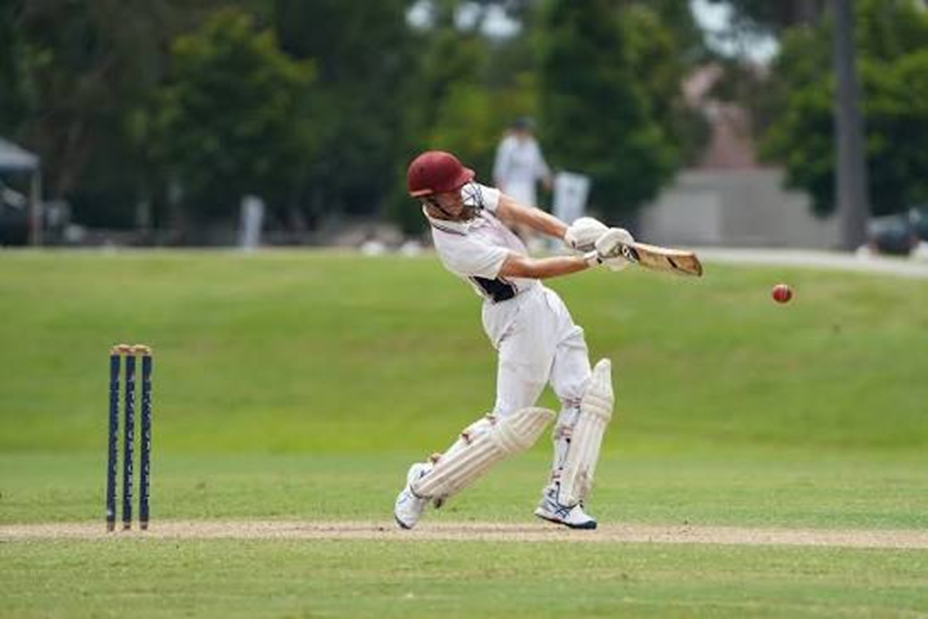
Most fans never think about codecs or edge nodes. They just know when a stream feels right: picture stays sharp, audio hits on time, and the feed doesn’t freeze on the only ball that matters. The gap between that experience and a stuttering mess isn’t luck, it’s architecture.
Open a modern cricket hub and the tech stack is hiding in plain sight. You tap in to read more about a live fixture, and behind that button is a conveyor belt of capture cards, encoders, CDNs, and playback logic trying very hard not to be noticed. When all those pieces line up, a six feels instant. When they don’t, you hear your neighbor cheer before your screen catches up.
Here’s what actually sits under a good live sports stream.
Capture: getting the moment into the pipe
Everything starts on the ground.
- Cameras
Stadium feeds have moved from mixed analog/HD to fully digital chains. Multiple broadcast cameras, super-slow-mo units, stump cams, spidercams – all syncing to a central vision mixer. - SDI to IP
Raw feeds from cameras usually ride over SDI cables into switchers, then into IP video over dedicated links. The goal is zero added delay before encoding. - Audio
Commentary, stump mics, crowd mics, on-field interviews – mixed separately but timestamped with the same clock as video. If timing drifts here, you never fix it later.
Clock discipline at this stage matters more than any fancy compression later on. If the on-site pipeline jitters, everything downstream inherits the wobble.
Encoding: shrinking without breaking
Next step: turn heavy raw feeds into something the internet can carry.
- Codecs
- H.264/AVC is still the workhorse: compatible with almost everything.
- H.265/HEVC and AV1 show up where devices allow, squeezing more quality into fewer bits.
- Resolutions and frame rates
- 1080p/50 or 60 fps for sports is common; some feeds push 4K, but motion clarity beats pixel count.
- Hardware encoders
Dedicated ASIC or GPU-based units (from vendors like Elemental, Harmonic, etc.) crunch the video in real time. Software encoders alone usually can’t keep up with multi-feed sports at scale.
Everything is encoded into multiple “rungs” – 240p, 360p, 480p, 720p, 1080p – so weaker connections can fall back without outright dying.
Packaging and protocols: how “live” becomes live enough
This is where the real-time illusion is made or broken.
- HLS / DASH
For years, standard HLS/DASH with 6–10 second segments was normal. Great for stability, awful for latency. - Low-latency HLS (LL-HLS) and low-latency DASH
Today’s better platforms use chunked transfer:- Segments are broken into partial chunks.
- Players start showing video before full segments are complete.
- End-to-end delay can drop into the 3–6 second range.
- WebRTC
For ultra-low-latency use cases (some live betting, interactive shows), WebRTC comes in:- Sub-second delay is possible.
- Harder to scale and more brittle under bad networks.
- Often reserved for special features rather than the main public feed.
Choosing the protocol is always a trade-off between latency, scalability, and robustness. Sports needs “fast enough” that fans aren’t spoiled by neighbors or score apps, not necessarily video call speed.
ABR ladders: quality that bends instead of snaps
Adaptive bitrate (ABR) streaming is the silent hero of watchable live video.
- Multiple renditions
The same stream exists at multiple bitrates and resolutions. The player chooses the right “step” for the user’s current network and device. - Smart switching
Better players:- Monitor buffer depth, throughput, and recent stability.
- Switch down in quality before the buffer empties.
- Switch up carefully to avoid bouncing between HD and SD every other over.
- Sports-specific tuning
High motion and detail (grass, crowd, ball) demand more bits. ABR ladders for cricket or football are tuned differently than for a static talk show. If the ladder is wrong, you get muddy motion or pointless 4K rungs no one can sustain.
CDNs and edge: moving the stadium closer
No matter how perfect the encode, if the server is “far away,” the stream suffers.
- Content Delivery Networks (CDNs)
- Large providers replicate segments across a mesh of edge servers.
- Users hit the nearest edge instead of a distant origin.
- Multi-CDN strategies
Big events don’t trust a single network. Traffic is split across multiple CDNs, often with:- Real-time monitoring of performance per region.
- Failover or rebalancing when one path falters.
- Regional PoPs
For cricket-heavy markets, extra edge nodes are placed physically close to carriers. That trims milliseconds and reduces hops, which cuts both latency and rebuffering.
Put simply: the closer the content is cached to the fan, the less the internet has to improvise.
Players: the underrated part of the stack
The app or browser player is the brain that turns all those segments into something watchable.
Responsibilities include:
- Buffer management
Keeping just enough video queued to absorb network jitter without adding unnecessary delay. - Latency controls
“Live edge” chasing modes that pull the viewer closer to real time when conditions allow, or gently back off when networks get rough. - Sync
Aligning audio with video, overlays with both, and sometimes even multiple camera angles in a multi-view interface. - Device specialization
- On low-end Android, be frugal with CPU and memory.
- On newer devices, use hardware decoding and higher ladders.
- Respect battery; streaming at max brightness/bitrate isn’t always smart.
A sloppy player can ruin immaculate CDN and encoder work in seconds.
Audio: the part everyone notices when it’s wrong
Video gets the glory, but audio carries a lot of the experience.
- Low-latency audio pipelines
Commentary needs to land on top of the right ball, not half a second behind. - Mixing
- Crowd, stump mics, bat sounds, and commentators balanced for phone speakers and TVs.
- On mobile, mid-range clarity matters more than deep bass.
Many “this stream feels off” complaints are actually about audio drift or poor mixing.
Data overlays and real-time stats
Modern sports streams are only half about pixels; the other half is numbers and graphics.
- Real-time data ingestion
Ball-by-ball feeds from official scorers and tracking systems (Hawk-Eye, ball-tracking, fielding maps) flow into separate pipelines. - Rendering layers
Overlays are drawn on top of the video in the app: score bugs, wagon wheels, Manhattan charts, win-probability graphs. - Sync again
Data has to match the ball. If the graphic for a six appears on the next delivery, fans will spot the lag instantly.
This still-evolving layer is why some apps feel “alive” while others feel like they’re just piping TV into a small rectangle.
DRM and rights protection
Nobody likes DRM until a stream gets pulled for piracy and blackouts.
- Encryption
Segments are encrypted (Widevine, FairPlay, PlayReady) and keys are issued per session. - Tokenized URLs
Each user gets time-limited, signed URLs; shared links die quickly. - Forensic watermarking
Invisible patterns embedded into video to identify which account or region leaked a pirated copy.
The goal is to deter mass freeloading without adding friction for legitimate viewers. Not easy. Necessary.
Monitoring: catching problems before the crowd does
High-quality live streaming is obsessive about telemetry.
- QoE metrics
- Startup time, rebuffer ratio, average bitrate, watch time.
- Broken down by device, region, CDN, ISP.
- Synthetic probes
Test clients running globally that continuously stream and report health. - Alerts
When a region’s rebuffering spikes or latency drifts, operations teams move traffic, adjust ladders, or even lower quality to keep streams alive under pressure.
Without this feedback loop, even the best design will crumble during a playoff or a final.
Where the tech is heading
Sports streaming isn’t done evolving. Some near-term trajectories are already clear:
- WebRTC-like latencies at HLS-scale
Work to push LL-HLS and low-latency DASH closer to 1–2 second glass-to-glass. - Smarter ABR
Machine-learning-guided bitrate selection that predicts network behavior instead of just reacting. - Edge compute
Doing some encoding, ad insertion, and personalization at the edge itself for speed and resilience. - Codec upgrades
Wider support for AV1 and eventually VVC, bringing better quality to the same bandwidth. - Tighter multi-stream sync
For multi-angle viewing, social watch parties, and mixed feeds (main, highlights, tactical cams) that actually line up.
Why fans should care, even a little
No, nobody needs to memorize acronyms to enjoy a game. But understanding the moving parts explains a lot:
- Why one app is always a ball behind your friend’s TV.
- Why mobile streams sometimes drop quality but rarely fully freeze.
- Why some platforms handle big matches calmly while others fall apart under load.
High-quality live sports streaming is less about one magical technology and more about a chain that has no weak link. Cameras, encoders, protocols, CDNs, players, data, DRM, monitoring – each must do its job quietly, so the only thing fans notice is the game itself.


