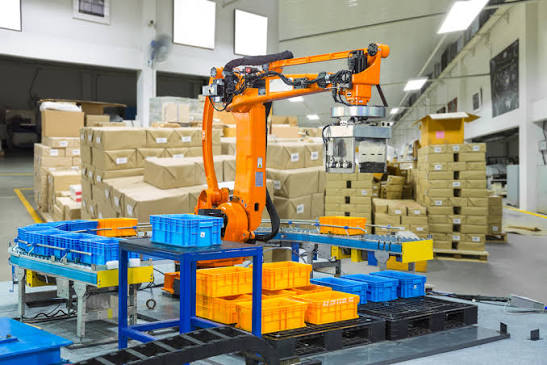
Robotic Material Handling Systems: How They Work and Their Applications
Manufacturing facilities handle thousands of components, raw materials, and finished products every day. Moving these items between workstations may seem like a simple task, but it can take considerable time and effort, especially when production involves heavy loads, repetitive movements, or delicate parts. Robotic material handling helps businesses manage these tasks with greater consistency, speed, and control.
These systems use industrial robots, grippers, sensors, and control software to move materials from one location to another with minimal manual intervention. They can support activities such as loading machines, sorting components, transferring products, and packing finished goods. Understanding how these systems work, where they are used, and what to consider before adopting them helps manufacturers decide whether automation suits their production needs.
How Robotic Material Handling Systems Work on the Factory Floor
A robotic material handling system combines mechanical equipment, sensors, gripping devices, and control systems to move materials through a defined process. Its main purpose is to perform material movement accurately and repeatedly while reducing unnecessary manual work.
Identifying and Locating Materials
The process begins when a robot receives instructions about which item to pick and where to move it. Sensors, cameras, or predefined position data help identify the object’s location, orientation, and size. This information allows the system to plan a suitable movement.
Picking and Securing the Object
Once the item is located, the robot uses an appropriate gripping device to pick it up. The gripping method depends on the object’s weight, shape, surface, and fragility. A secure grip helps prevent slipping, deformation, or damage during movement.
Moving and Placing the Material
The robot follows a programmed path to transport the item to its destination. It may place a component inside a machine, position a part on an assembly fixture, or transfer a finished product to packaging equipment. Positioning accuracy is especially important when the next production step requires precise alignment.
Communicating With Other Equipment
Robots often communicate with machines, conveyors, sensors, and production control systems. For example, a robot may wait until a machine finishes processing before removing a component. This coordination reduces unnecessary waiting and helps maintain a steady production flow.
Different Types of Robotic Material Handling Systems
Manufacturers can choose from several robot configurations depending on the task, available space, payload, and required movement.
Articulated Robots
Articulated robots have multiple rotating joints that allow flexible movement. They are commonly used for machine loading, palletizing, part transfer, and handling objects along complex paths. Their range of motion makes them suitable for workstations that require movement in several directions.
Cartesian Robots
Cartesian robots move along straight axes, usually in three dimensions. Their predictable movement makes them useful for transferring parts between fixed positions, loading production equipment, and handling objects in applications that require controlled linear movement.
SCARA Robots
SCARA robots are designed for fast movements across horizontal work areas, with vertical movement available for picking and placing objects. They are suitable for repetitive assembly, sorting, and component transfer where speed and consistent positioning are important.
Collaborative Robots
Collaborative robots are designed for applications where people and robots may work in the same general workspace. However, safe operation is not automatic. A risk assessment, suitable safeguards, and application-specific safety measures are necessary before introducing them into a shared work area.
Key Applications Across Modern Manufacturing Industries
Robotic handling is used in many industries because materials must be moved safely and consistently between production stages. The specific equipment depends on the product, manufacturing process, and required level of automation.
Machine Loading and Unloading
Robots can load raw materials into machine tools and remove finished components after machining. This allows machines to continue working with less manual intervention. It is particularly useful when components are heavy, hot, sharp, or handled repeatedly throughout a production shift.
Assembly Line Operations
During assembly, robots move components between workstations and position them for the next operation. Coordinated robotic integration helps connect handling robots with assembly equipment, inspection stations, and other automated processes. The result is a more organized production sequence with fewer unnecessary transfers.
Packaging and Palletizing
Robots can pick finished products, arrange them into boxes, and stack packages onto pallets. Their programmed movements help maintain consistent placement and stacking patterns. These applications are useful in facilities that process large quantities of products or handle repetitive packaging tasks.
Electronics and Small Component Handling
Electronic components often require careful handling because they may be small, lightweight, or sensitive to static electricity. Automated systems can position circuit boards, transfer components, and support downstream operations. For example, PCB depaneling equipment can be incorporated into a production workflow where circuit boards are separated from manufacturing panels before further handling or assembly.
Food and Fragile Product Handling
Food products, baked goods, and other delicate items may be damaged by excessive gripping force. Suitable grippers, controlled movements, and hygienic equipment design help reduce product damage. The gripping system must match the product’s physical characteristics and the cleanliness requirements of the facility.
Important Components That Make a Handling System Reliable
A successful automation setup depends on more than the robot itself. Each component must work with the others to achieve the required level of performance.
Grippers and End-of-Arm Tooling
Grippers hold and release objects during handling. Depending on the application, they may use mechanical fingers, vacuum suction, or magnetic force. The correct design must account for load capacity, surface conditions, gripping pressure, and the possibility of damaging the workpiece.
Sensors and Vision Systems
Sensors provide information about an object’s position, presence, or condition. Vision systems can help locate randomly positioned components and check their orientation. These technologies are especially useful when objects do not always arrive at exactly the same position on a conveyor.
Controllers and Safety Equipment
Controllers coordinate the robot’s movements and communicate with other machines. Safety equipment may include guards, interlocked doors, scanners, and emergency-stop devices. The appropriate combination depends on the application and the results of a formal risk assessment.
Fixtures and Workholding Devices
Fixtures hold components in a stable position during handling or machining. In processes involving Tool and Die Machining, accurate workholding helps keep the workpiece correctly positioned while tools perform cutting or shaping operations. Reliable fixtures also make automated loading and unloading more repeatable.
How Automation Improves Productivity, Quality, and Workplace Safety
The main advantage of automated handling is the ability to perform repetitive movements consistently. However, the actual results depend on how well the system is designed and maintained.
More Consistent Production
Robots can repeat programmed movements with consistent positioning, helping reduce variation caused by repetitive manual handling. This can improve the repeatability of machine loading, component placement, and packaging operations. Product quality still depends on the accuracy of the complete process.
Reduced Manual Handling
Moving heavy, sharp, hot, or awkward objects can expose workers to physical risks. Automated handling can reduce direct contact with these materials and limit repetitive lifting. Workers may then focus more on monitoring, inspection, and tasks that require human judgment.
Better Use of Production Time
A robot can perform planned handling tasks throughout a production shift without the same fatigue-related changes in pace experienced by human workers. However, tool changes, equipment faults, material shortages, and maintenance requirements still affect overall output.
Improved Material Tracking
When connected to suitable production software, handling systems can record movements and exchange information with other equipment. This can help manufacturers identify bottlenecks, monitor production flow, and locate process delays more easily.
Practical Factors to Consider Before Installing a System
Automation should solve a clearly identified production problem. A careful assessment helps prevent unnecessary costs and operational difficulties.
Material Type and Payload
Manufacturers should evaluate the weight, dimensions, shape, temperature, and fragility of the objects being moved. The robot and gripping device must safely handle the maximum expected load, including the weight of any tooling attached to the robot.
Cycle Time and Required Accuracy
Cycle time refers to how long the system takes to complete a defined operation. Manufacturers should establish the required speed, positioning accuracy, and daily production volume before selecting equipment. Faster movement is not always better if it increases the risk of dropped parts or positioning errors.
Workspace and Existing Equipment
Available floor space, machine access, conveyor positions, and maintenance access influence system design. Existing equipment may require modifications or additional communication interfaces to work smoothly with the robot.
Safety, Maintenance, and Cost
Installation costs include the robot, grippers, fixtures, integration, programming, training, and safety equipment. Ongoing expenses may include maintenance, replacement parts, and energy consumption. Businesses should compare these costs with expected improvements in productivity, quality, and reduced manual handling.
Connecting Robotic Handling With Wider Automation Processes
Handling robots are often one part of a larger production system. When equipment is designed to work together, manufacturers can coordinate material movement with inspection, machining, assembly, and packaging.
Effective robotic integration requires compatible communication systems, suitable fixtures, reliable material supply, and clear coordination between machines. It also requires planning for exceptions, such as a missing component, a failed grip, or an unexpected machine stop.
Modern robotics and automation technology supports this coordination through improved sensing, control software, and data exchange. However, technology alone does not guarantee better results. Manufacturers must define process requirements, test the complete workflow, and train employees to operate and maintain the equipment correctly.
For related applications, industrial robotics provides a broader view of how robots perform tasks such as assembly, welding, inspection, and material movement across different manufacturing environments.
How SCHUNK Supports Toolholding, Gripping, and Automation Processes
SCHUNK works across toolholding and workholding, gripping technology, and automation technology. These areas are closely connected to material handling because robots need suitable gripping devices, while production machines often require reliable systems to hold tools and workpieces in the correct position.
Its capabilities include individual high-tech components and complete solutions for robot systems and different production processes. For example, handling a delicate component requires a gripping arrangement that applies the right amount of force. Similarly, machining a medical implant surface requires suitable workholding and toolholding solutions to maintain stability and precision.
These examples show why automation projects must consider the entire application rather than selecting a robot in isolation. The gripping method, workpiece characteristics, machining requirements, and production sequence all influence the final system design.
Conclusion
Robotic material handling systems help manufacturers move materials between production stages with greater consistency, control, and reduced manual effort. From machine loading and assembly to packaging and delicate component transfer, these systems support a wide range of industrial applications. Their effectiveness depends on selecting the right robot, gripping device, sensors, fixtures, and safety measures for the task.
Manufacturers should also consider integration requirements, maintenance costs, cycle times, and employee training before investing in automation. When planned around clear production needs, robotic handling can improve workflow and reduce repetitive work without compromising product quality or workplace safety. As manufacturing processes become more connected, these systems will continue to play an important role in building efficient, reliable, and flexible production environments.