Introduction
Choosing a shelving system is an important part of creating an efficient storage environment. Whether the application involves a home storeroom, office, retail space, workshop or commercial facility, the right shelving needs to accommodate the items being stored while making effective use of the available space. Traditional fixed shelving can provide a familiar solution, but changing storage requirements have increased interest in modular systems that can be adjusted or reconfigured.
Boltless shelving is one such option. Rather than relying on conventional bolts and nuts for every shelf connection, these systems typically use posts, clips, beams or other interlocking components to create a shelving structure. This construction can make assembly more straightforward while allowing shelf levels to be adjusted according to the items being stored.
However, boltless shelving is not automatically the right choice for every application. Load requirements, dimensions, available space, frequency of access and the type of inventory all need to be considered. Comparing these factors with the characteristics of traditional storage systems provides a more useful basis for making a decision.
Understanding the differences between the two approaches can help homeowners and businesses select shelving based on practical requirements rather than simply appearance or initial familiarity.
Understanding How Boltless Shelving Works
Boltless shelving is designed around a modular structure in which shelves and supporting posts connect without requiring conventional bolts at every joining point. Depending on the particular system, shelves may be supported by clips, brackets, beams or other purpose-designed connections.
One of the main characteristics of this design is flexibility. Shelf levels can often be repositioned to create different amounts of vertical clearance. This is useful when a storage area contains objects of different sizes, since each tier can be configured around the dimensions of the items rather than using a uniform fixed arrangement.
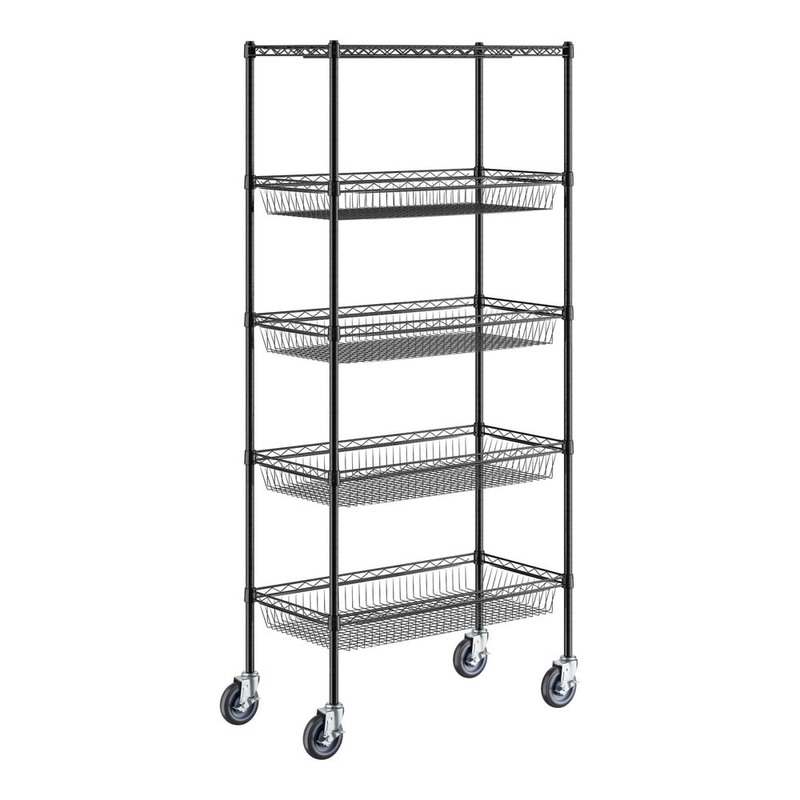
The open construction found in many boltless wire systems can also make stored goods easier to identify. Instead of hiding items behind solid cabinet doors, an open shelf allows users to see containers, boxes, tools and supplies directly. This can be especially useful in storerooms and commercial environments where employees need to locate items quickly.
Another consideration is modularity. A shelving unit can potentially be adapted as storage requirements change, subject to the design and compatible components of the particular system. This makes the system different from a permanently fixed arrangement where changing the shelf layout may require substantial disassembly or replacement.
The term boltless does not mean that structural considerations can be ignored. The quality of the components, correct assembly, shelf capacity and appropriate loading remain important. The manufacturer’s specifications should always be followed, particularly where shelving is intended for heavier commercial or industrial storage.
For buyers comparing Singapore shelves, understanding the underlying construction is therefore more useful than judging systems only by their external appearance. The way the components connect can directly influence assembly, adjustability and future flexibility.
Comparing Installation Requirements
Installation is one of the clearest areas in which different shelving designs can vary. Traditional shelving may require bolts, nuts, screws or other fastening hardware to secure individual components. Depending on the size and construction of the unit, assembly can involve more tools and a greater number of individual connections.
Boltless systems are generally designed to simplify this process. Their components can be assembled using the intended connection mechanism, reducing the need for conventional fastening at each shelf level. This can make the initial setup more straightforward, particularly for modular shelving that contains several tiers.
The practical advantage becomes more apparent when a storage area contains multiple shelving units. If each unit requires extensive fastening and alignment, installation can take considerable time. A system designed for simpler assembly can potentially reduce the amount of work involved in creating a complete storage layout.
However, ease of assembly should not be confused with a lack of precision. Posts need to be positioned correctly, shelves need to be properly seated and the completed structure should be checked for stability before being loaded. Following the manufacturer’s assembly instructions is essential.
Installation conditions can also affect the decision. A homeowner organising a small storeroom may value straightforward assembly because professional installation may not be necessary for every application. A business setting up a larger storage area, meanwhile, may be more concerned with installation time across multiple units.
Traditional systems can still be appropriate where a fixed structure is preferred or where existing storage infrastructure already uses a particular fastening method. The important point is to consider the entire installation process rather than assuming that one construction method is universally better.
Ultimately, the best choice depends on how frequently the shelving will need to be installed, modified or expanded, as well as the complexity of the storage environment.
Comparing Adjustability and Configuration Options
Storage requirements rarely remain completely static. A household may acquire new appliances, tools or seasonal belongings, while a business may change its product range or inventory volume. This makes adjustability an important consideration when selecting a shelving system.
Traditional fixed shelving tends to provide a predetermined arrangement. Once shelves are installed, changing their positions may require additional work or may not be possible without replacing components. This can be perfectly suitable when the stored items are consistent in size and the layout is unlikely to change.
Boltless shelving generally takes a more flexible approach. Shelf positions can be adjusted on compatible systems so that the available vertical space is better matched to the stored items. A shelf used for small containers can therefore be positioned differently from one intended for larger boxes or equipment.
This ability to change the configuration can reduce wasted space. If a shelf has excessive unused height above its contents, moving the shelf to a more suitable position can create room for another storage level or improve the overall arrangement.
Adjustability can also support different stages of business operations. A retail business might need additional space for seasonal inventory at certain times of the year. A workshop may acquire larger equipment that requires more clearance. An office might gradually accumulate archive boxes and supplies. A flexible shelving system can potentially accommodate these changes without requiring a completely new storage structure.
The degree of adjustability still depends on the specific shelving model. Buyers should check how shelf positions can be changed, what accessories are compatible and what configurations are supported by the manufacturer.
The most useful shelving system is therefore not necessarily the one with the greatest number of shelves. It is the one that allows available space to be configured appropriately for the objects, workflow and future requirements of the environment.
Understanding Load Capacity and Stability
Load capacity is one of the most important factors when comparing shelving systems. A visually substantial shelving unit is not necessarily suitable for heavy storage, and a system intended for lightweight household goods should not be assumed to support industrial loads.
Manufacturers generally provide load ratings for individual shelves or for particular configurations. These ratings should be interpreted according to the manufacturer’s stated conditions. In particular, evenly distributed loads can behave differently from concentrated weights placed in a small section of a shelf.
The weight of the stored items should therefore be assessed before selecting a shelving system. A household might only need to accommodate cleaning supplies, boxes and small appliances, while a workshop or warehouse could require shelving for tools, equipment or heavier stock.
The dimensions and construction of the shelving also matter. Longer shelves, shelf depth, supporting components and the arrangement of the frame can all influence how loads are handled. The complete system should be selected according to its intended application rather than simply focusing on one specification.
Loading practices are equally important. Heavy objects should be placed appropriately, and users should avoid exceeding the stated capacity. Storage should be arranged in a balanced manner rather than concentrating excessive weight in one area.
Stability should also be considered during installation and use. The shelving needs to be assembled correctly, placed on a suitable surface and used according to the manufacturer’s instructions. Where additional stability measures or accessories are specified, they should not be overlooked.
This is particularly relevant in commercial environments, where shelving may remain continuously loaded. A system designed for the actual storage conditions can provide a more reliable foundation for long-term organisation.
Comparing load capacity and stability therefore requires looking at the complete shelving system, including its construction, configuration and intended operating conditions.
Evaluating Long-Term Practicality
The initial purchase price of shelving is only one part of the decision. A storage system may remain in use for years, meaning that its adaptability, maintenance requirements and ability to accommodate changing needs can have a significant influence on its overall value.
Fixed shelving can work well when the storage requirements are predictable. For example, an organisation that stores items of similar dimensions and rarely changes its inventory may not require extensive reconfiguration. In such circumstances, a permanent layout can be straightforward and effective.
More flexible systems may become advantageous when storage conditions are likely to change. Adjustable shelves can allow the same unit to serve different purposes over time. Instead of replacing an entire structure because a particular shelf arrangement no longer works, users may be able to modify the configuration.
Maintenance should also form part of the evaluation. The shelving should be inspected periodically for signs of damage, loose components or other issues. Any damaged parts should be addressed according to the manufacturer’s recommendations.
The environment in which the shelving will operate is another consideration. Residential storerooms, retail stockrooms, workshops and industrial spaces can have very different requirements. Factors such as frequency of access, type of inventory and surrounding conditions may influence the most appropriate construction and finish.
Accessories can also affect long-term usefulness. Depending on the system, components such as shelf liners, casters, hooks, ledges and other additions may provide ways to adapt storage for particular tasks.
A shelving system should therefore be assessed as a long-term storage tool rather than a one-time purchase. The more likely it is that the user’s requirements will change, the more important flexibility and compatibility become.
Choosing the Right System for the Application
There is no single shelving configuration that is ideal for every environment. The most suitable option depends on the purpose of the storage system, the physical space available and the characteristics of the items being stored.
For residential use, factors such as footprint, accessibility and appearance may be particularly important. A homeowner organising a compact storeroom may prioritise adjustable shelf levels and efficient vertical storage, while a garage user may place greater emphasis on load capacity.
Retail businesses have different priorities. Stock needs to be visible, accessible and organised according to product categories and movement frequency. Adjustable shelving can be useful where inventory changes throughout the year, while garment racks may be more appropriate for clothing.
Workshops and industrial environments may require stronger configurations designed for heavier equipment and supplies. In these settings, load ratings, dimensions and stability become particularly important.
Businesses should also consider workflow. Shelving should not simply provide storage capacity; it should support the movement of people and goods through the working environment. Frequently accessed inventory should be positioned conveniently, while less frequently used items can occupy areas that are less central to daily operations.
Future requirements should also be considered. If inventory is expected to grow, selecting a modular system may provide greater flexibility than choosing a fixed arrangement that only meets today’s needs.
The final decision should therefore be based on a combination of capacity, dimensions, construction, adjustability, accessibility and intended use. By comparing these factors systematically, buyers can select a storage solution that is practical for the environment rather than relying on a generic definition of what makes shelving “better”.
Conclusion
Boltless and traditional shelving systems can both provide effective storage, but their characteristics make them suitable for different requirements. Traditional systems can be appropriate where a fixed arrangement is sufficient, while boltless shelving can offer advantages when straightforward assembly, adjustable shelf positions and future reconfiguration are important.
Load capacity, dimensions and stability should remain central to the decision. The shelving needs to be capable of handling the intended items, while the layout should preserve accessibility and make sensible use of the available space. Long-term considerations such as maintenance, accessories and changing storage requirements can also influence which system provides the better practical solution.
For homes, offices, retail businesses and workshops, the right shelving is ultimately the one that matches the environment and its specific storage demands. A flexible system can be particularly valuable when the size and type of stored items are likely to change over time.
For buyers comparing modular storage options, Jin Yu Trading offers boltless shelving and rack systems designed for a range of residential and commercial storage applications, including adjustable wire shelving configurations and related accessories.