Your customers aren’t Googling anymore—they’re asking ChatGPT, Perplexity, and Google’s AI for answers. And if your brand isn’t showing up in those AI-generated responses, you’re essentially invisible to a massive and growing audience.
This shift has created an entirely new category of software: AI SEO tools designed for Generative Engine Optimization (GEO). After spending weeks evaluating over 20 platforms, I’ve narrowed down the ones that actually deliver measurable results. Here’s what you need to know.
Understanding AI SEO Tools
Traditional SEO gets you ranked on Google. AI SEO tools help you get cited by AI assistants—ChatGPT, Claude, Perplexity, Google AI Overviews, and others. The goal isn’t just visibility; it’s becoming the source that AI recommends when users ask questions in your industry.
According to Gartner’s research, traditional search engine traffic could decline by 25% through 2026 as AI assistants capture more queries. This makes GEO not just a nice-to-have but a strategic imperative.
Most AI SEO platforms fall into two camps: monitoring tools that track your brand mentions across AI platforms, and optimization tools that help you improve your content for better citation rates. The best solutions do both.
Quick Reference: Top AI SEO Platforms
| Tool | Primary Strength | Monthly Cost | Trial Available |
| Geoptie | Complete GEO suite | From $49 | 14-day trial |
| Semrush AI Toolkit | SEO ecosystem integration | From $99 | Limited |
| Otterly.AI | Entry-level monitoring | From $29 | 14-day trial |
| Profound | Enterprise-scale tracking | From $399 | Demo only |
| Peec AI | Analytics dashboards | From €89 | Yes |
| ZipTie.dev | Google AI Overviews | From $69 | Yes |
| AthenaHQ | Workflow automation | From $295 | Yes |
| Ahrefs Brand Radar | Research capabilities | From $129 | Beta access |
| Rankability | Agency coaching model | From $149 | Yes |
| HubSpot AI Grader | Free baseline check | Free | N/A |
In-Depth Platform Reviews
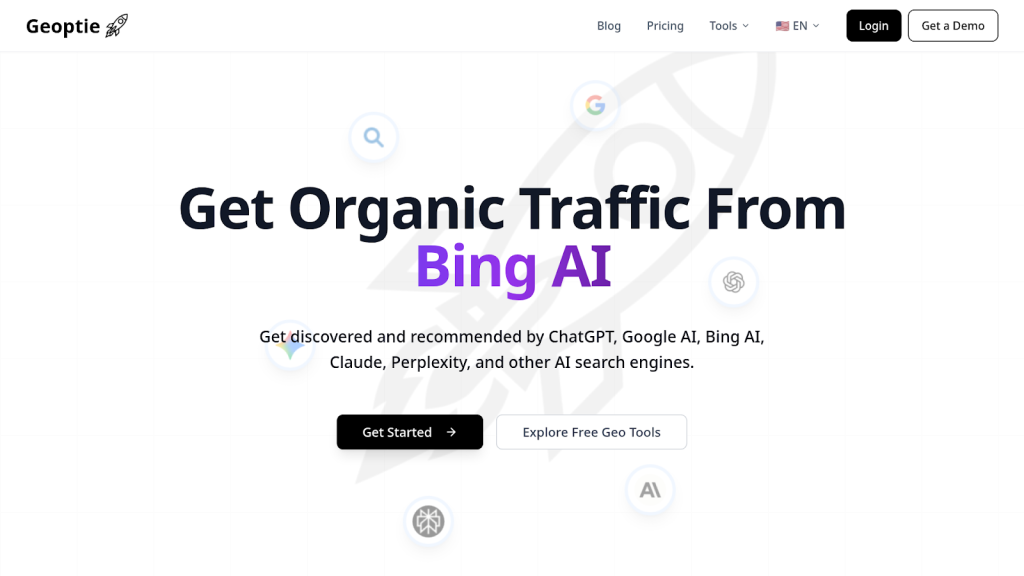
1. Geoptie — Complete GEO Platform
Cost: $49/month (Starter) to $199/month (Enterprise) Trial: 14 days free
Geoptie stands out by offering both tracking and optimization in one package—something surprisingly rare in this market. While most competitors focus exclusively on monitoring, Geoptie provides actionable tools to actually improve your AI visibility.
The platform includes AI visibility tracking across all major engines, competitor citation analysis, detailed GEO audits with specific recommendations, a content studio for creating AI-optimized content, keyword discovery tools, and progress tracking over time.
What makes it particularly accessible is the suite of seven free tools available without subscription: GEO Audit, Content Checker, Keyword Finder, Rank Tracker, GEO Checklist and Backlink Finder. This lets you evaluate the approach before committing.
Strengths: Exceptional value proposition—similar all-in-one platforms cost $300-500/month. Unlimited audits and content analyses across all tiers. The 14-day trial provides ample time to evaluate fit.
Limitations: Newer entrant compared to legacy SEO brands. Focused specifically on GEO rather than traditional search metrics.
Verdict: The clear winner for teams wanting comprehensive GEO capabilities without enterprise budgets.
2. Semrush AI Visibility Toolkit — For Existing Semrush Users
Cost: $99/month standalone; bundled options available Trial: 7-14 days with Semrush One
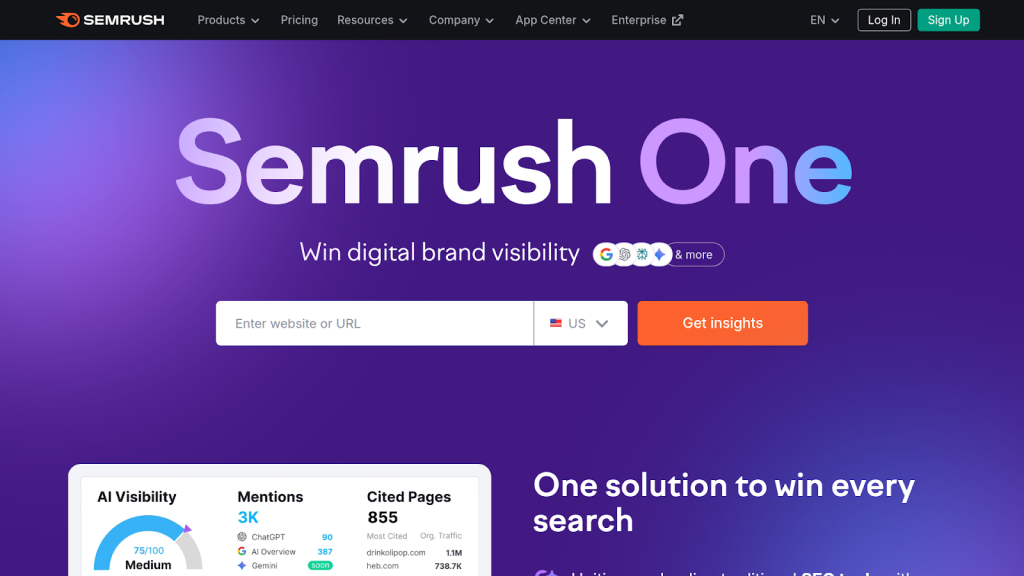
For organizations already running Semrush for traditional SEO, their AI Visibility Toolkit creates a unified dashboard combining search rankings and AI citation data.
The toolkit delivers AI Visibility Scores, prompt tracking (limits vary by plan), brand performance reporting, competitor comparisons, and site audits for AI crawlability.
Strengths: Seamless workflow for current Semrush customers. Single interface for all search visibility data. Solid competitive intelligence features.
Limitations: Additional domains cost $99/month each. Currently tracks 3-4 AI engines. Prompt quotas can feel restrictive. No standalone trial.
Verdict: Natural choice for Semrush loyalists. Teams starting fresh might find purpose-built GEO tools more feature-rich.
3. Otterly.AI — Budget-Friendly Entry Point
Cost: $29/month (Lite) to $989/month (Pro) Trial: 14 days free
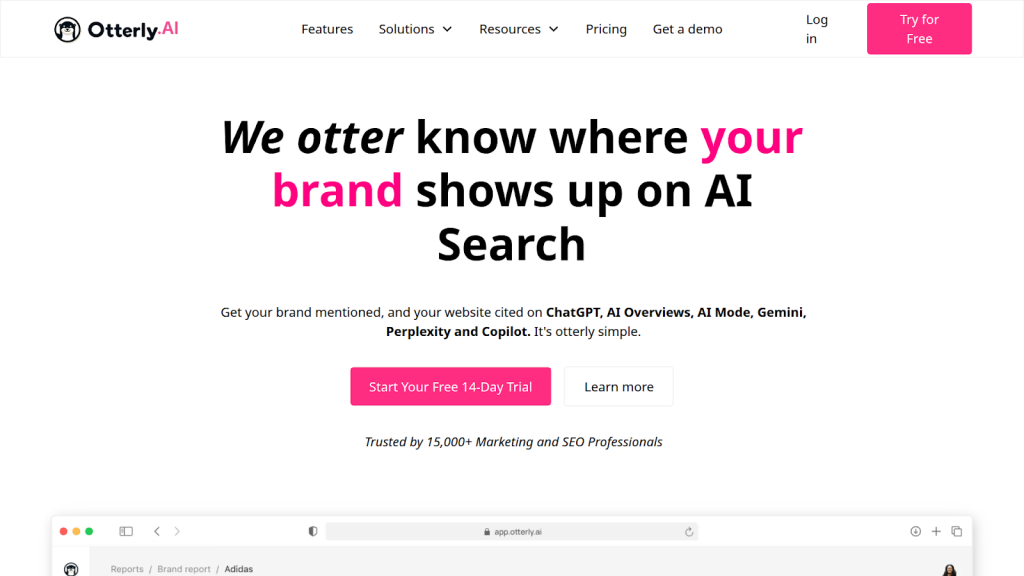
Otterly.AI removes the cost barrier for teams exploring AI search monitoring. The Lite tier at $29/month provides basic brand mention tracking, citation monitoring, and GEO auditing across six AI engines. Recognized as a Gartner Cool Vendor in 2025.
The platform covers brand mention and citation tracking, GEO audits examining 25+ on-page factors, keyword-to-prompt conversion, automated weekly reports, and Semrush App Center integration.
Strengths: Lowest entry price in the category. Solid 14-day trial. Industry recognition from Gartner and G2. Straightforward setup process.
Limitations: Lite plan restricts you to roughly 10 prompts. Costs climb significantly as tracking needs grow. Optimization guidance is basic.
Verdict: Perfect for testing GEO strategies on a shoestring. Scale-up costs may push growing teams toward alternatives.
4. Profound — Enterprise-Grade Solution
Cost: $99/month (Starter) to custom enterprise pricing Trial: Demo required
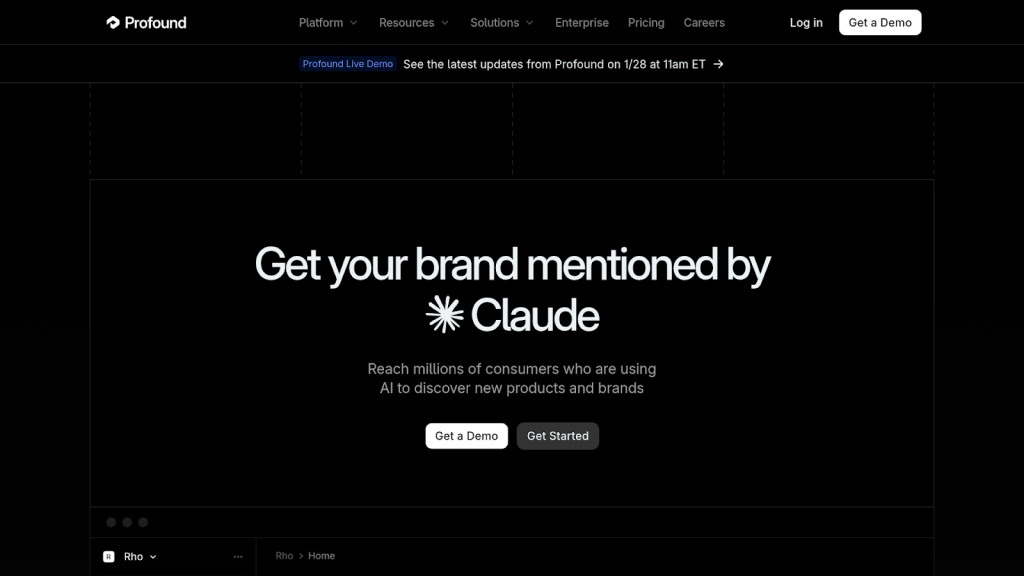
Backed by $35M from Sequoia Capital, Profound has become the default choice for Fortune 500 companies taking GEO seriously. The platform monitors 10+ AI engines and includes specialized features like shopping visibility for e-commerce brands.
Core capabilities include Answer Engine Insights dashboards, prompt volume research, Agent Analytics for tracking AI crawlers, shopping visibility metrics, workflow automation, and SOC 2 Type II plus HIPAA compliance.
Strengths: Most robust enterprise feature set. Top-tier security certifications. Dedicated strategist support. Documented success with major brands.
Limitations: Growth tier ($399/month) required for multi-engine tracking. Starter plan limited to ChatGPT. No self-service trial option.
Verdict: Right fit for enterprises with substantial budgets and compliance requirements. Mid-market teams will find the pricing prohibitive.
5. Peec AI — Analytics-Focused Platform
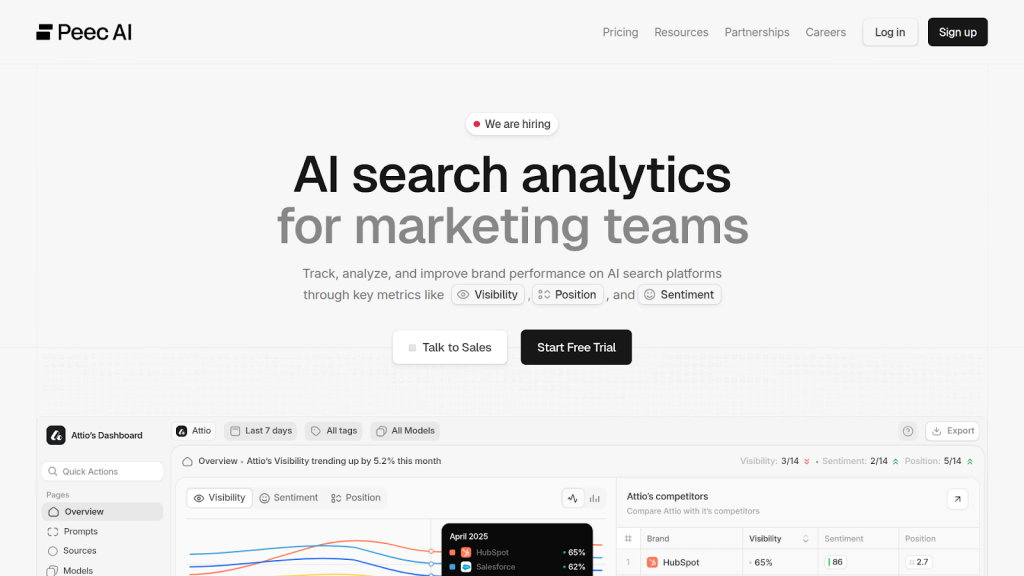
Cost: €89/month (~$104) to €499/month (~$580) Trial: Available
Peec AI emphasizes clean, intuitive reporting over raw data dumps. The dashboards make AI visibility metrics accessible even for teams new to GEO, with visibility, position, and sentiment tracking front and center.
Features include AI-suggested prompts with search volume estimates, source analysis for identifying citation opportunities, competitor benchmarking, Looker Studio and API connectivity, and unlimited user seats on all plans.
Strengths: Elegant interface design. Sentiment analysis in mid-tier. No per-seat pricing. Strong reporting and export capabilities. GDPR-focused European company.
Limitations: Monitoring-only—no content optimization. Claude and DeepSeek require add-ons. Euro pricing creates currency fluctuation risk.
Verdict: Excellent for teams prioritizing analytics and reporting. Pair with optimization tools for complete coverage.
6. ZipTie.dev — Google AI Overviews Specialist
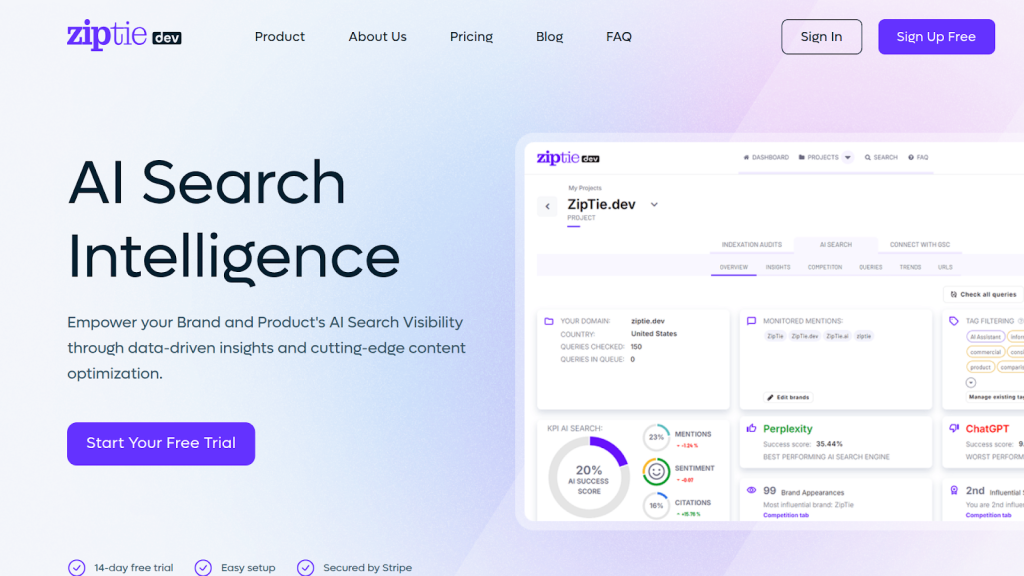
Cost: Starting at $69/month Trial: Available
ZipTie.dev has specialized in Google AI Overviews tracking for two years, developing deep expertise in what Google’s AI engine rewards. Unlike monitoring-only tools, it includes content optimization guidance.
The platform offers AI success scores for prioritization, specific content recommendations, competitor tracking, query categorization, and site indexing monitoring.
Strengths: Deep Google AI expertise. Combines monitoring with optimization. Competitive pricing. Actionable content guidance.
Limitations: Covers only three engines (ChatGPT, AI Overviews, Perplexity). Smaller user community.
Verdict: Strong choice for teams laser-focused on Google’s AI features. Those needing broader coverage should look elsewhere.
7. AthenaHQ — Automation-First Approach
Cost: Starting at $295/month Trial: Available
AthenaHQ pioneered the purpose-built GEO platform category, featuring an Action Center that translates data into specific, actionable fixes. The emphasis on automation makes it popular with technical SEO agencies.
Capabilities include multi-engine citation tracking, Action Center with prioritized recommendations, real-time alerts, credit-based content optimization, and automated workflows.
Strengths: Recommendations are specific and actionable. Automation streamlines agency workflows. Content optimization included. Established track record.
Limitations: Credit system for optimization can become expensive at scale. $295/month starting price excludes smaller operations. Lower tiers emphasize ChatGPT.
Verdict: Well-suited to technical agencies comfortable with automation platforms. Budget-conscious teams have more affordable paths.
8. Ahrefs Brand Radar — Research Powerhouse
Cost: $129/month (Ahrefs Lite includes basics); $699/month for full AI bundle Trial: Beta features currently free
Ahrefs approaches GEO through a research lens, tracking brand visibility across AI answers, YouTube, TikTok, Reddit, and traditional web mentions. Their 250M+ prompt database enables deep competitive research.
The platform provides massive prompt database access, multi-channel visibility tracking, competitive benchmarking, citation source analysis, and custom prompt monitoring.
Strengths: Broadest data coverage. Goes beyond AI to track all brand visibility channels. Natural fit for Ahrefs users. Research-oriented capabilities.
Limitations: Full AI engine access requires expensive add-ons. Beta status with reported accuracy inconsistencies. Pure monitoring—no optimization guidance.
Verdict: Powerful research tool, but expensive for comprehensive access. Teams needing optimization guidance need to look elsewhere.
9. Rankability — Coaching-Included Model
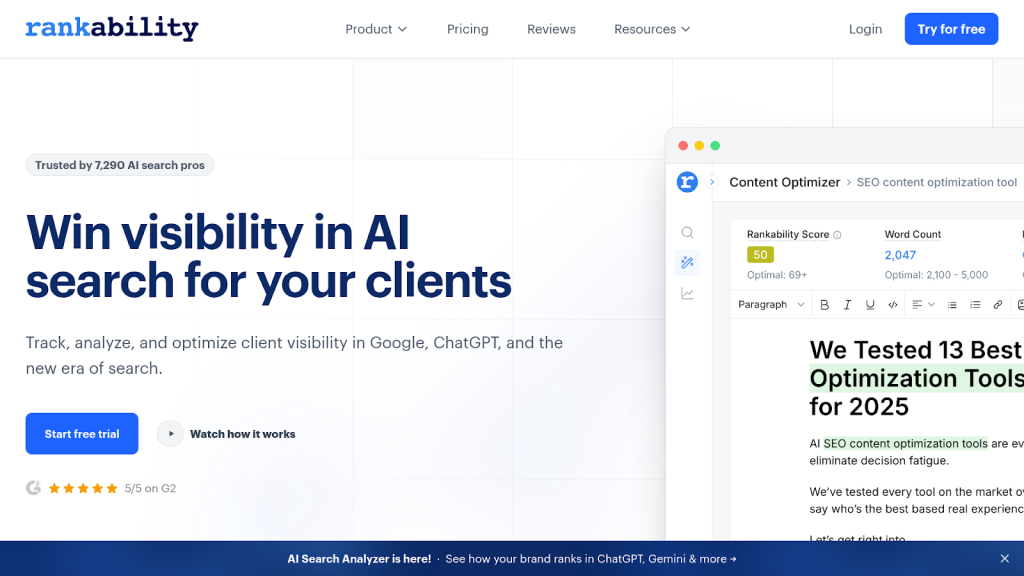
Cost: $149/month (tools + coaching) Trial: Available
Rankability takes a unique approach by bundling expert coaching calls with its AI visibility and content optimization tools. The combination targets agencies and consultants building GEO expertise.
The package includes AI visibility tracking across 6+ engines, real-time content scoring, revenue attribution features, monthly coaching calls, and integrated content optimizer.
Strengths: Human expertise included—not just software. Proven content optimization tools. ROI measurement through revenue attribution. Strong agency orientation.
Limitations: Higher price point if you only need monitoring. Coaching value varies by team maturity. May be excessive for simple tracking needs.
Verdict: Ideal for agencies and consultants wanting guidance alongside tools. The coaching component differentiates it significantly.
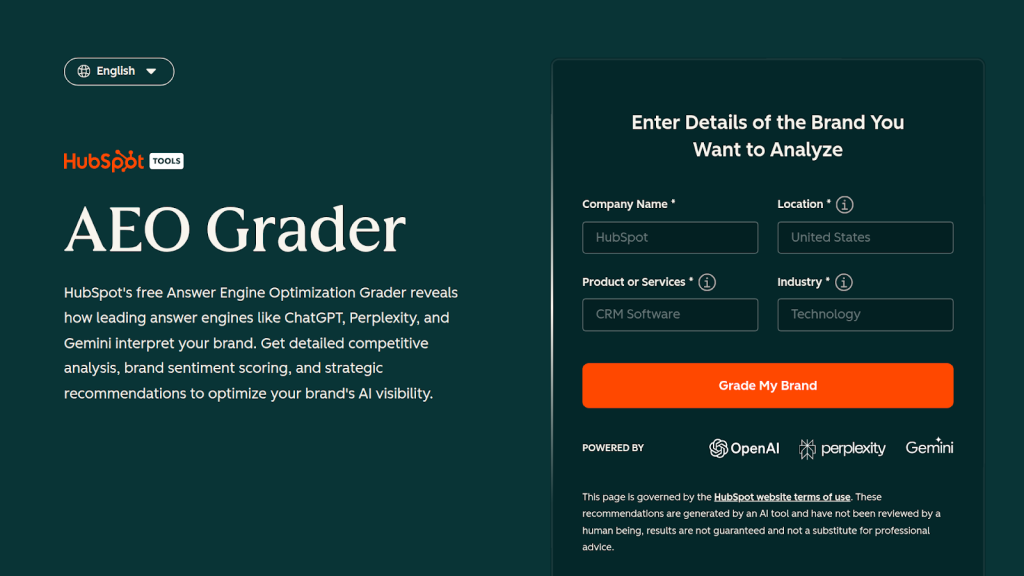
10. HubSpot AI Search Grader — Free Starting Point
Cost: Free Trial: N/A
HubSpot’s AI Search Grader offers a zero-cost way to benchmark your current AI visibility. It scans ChatGPT, Perplexity, and Gemini to evaluate mention frequency, sentiment, and competitive standing.
The tool provides brand mention frequency analysis, sentiment scoring, competitor comparisons, and basic visibility grades.
Strengths: Completely free. Quick results. Zero commitment. Solid introduction to GEO concepts.
Limitations: One-time snapshot, not ongoing monitoring. No optimization recommendations. Limited analytical depth. No historical tracking.
Verdict: Use it to establish your baseline before evaluating paid solutions. Not a substitute for comprehensive platforms.
Common Questions About AI SEO Tools
How does GEO differ from traditional search optimization?
Traditional SEO aims to rank your pages in search results so users click through. GEO aims to make your brand the source AI assistants cite when answering questions. Traditional SEO drives website traffic; GEO drives brand recommendations in the AI search layer.
What’s the typical investment for AI SEO software?
The range spans from free (HubSpot) to $500+ monthly for enterprise platforms. Entry-level monitoring starts around $29/month with Otterly.AI. Mid-tier comprehensive tools like Geoptie run $49-100/month. Enterprise solutions from Profound or Goodie AI start at $400-500/month.
Can one tool handle both monitoring and optimization?
Some can. Geoptie, ZipTie.dev, and Rankability combine both functions. However, many platforms (Peec AI, Otterly.AI, Ahrefs Brand Radar) focus purely on monitoring. Check whether optimization capabilities are included before choosing.
Which AI engines should I prioritize?
ChatGPT and Google AI Overviews currently generate the most AI search traffic. Perplexity is growing rapidly, especially among researchers. Claude, Gemini, and Copilot matter depending on your audience demographics. Most serious tools cover the major engines.
What timeline should I expect for GEO results?
Typically 2-4 months for meaningful improvement as you optimize content and AI models refresh their knowledge. Some tactical fixes (technical issues, high-authority content optimization) can show faster movement. Consistent monitoring reveals what’s working.
Is GEO making traditional SEO obsolete?
No. Strong SEO fundamentals—quality content, technical soundness, authority signals—actually boost GEO performance because AI models frequently cite authoritative, high-ranking sources. The most effective approach combines both disciplines.
Final Recommendations
The AI search transition is accelerating. Organizations investing in GEO now position themselves ahead of competitors who wait.
For most organizations: Geoptie delivers the strongest value, combining monitoring and optimization at $49/month—roughly 80-90% less than comparable all-in-one platforms.
For enterprise requirements: Profound offers the most mature enterprise capabilities with compliance certifications and dedicated support.
For existing tool investments: Semrush AI Toolkit and Ahrefs Brand Radar integrate with their parent ecosystems, preserving familiar workflows.
For tight budgets: Otterly.AI and HubSpot AI Search Grader provide accessible entry points to understand your current position.
The critical step is starting somewhere. Use available trials and free tools to assess your AI visibility, then select the platform matching your resources and requirements. Brands taking action today will be the ones AI assistants recommend tomorrow.