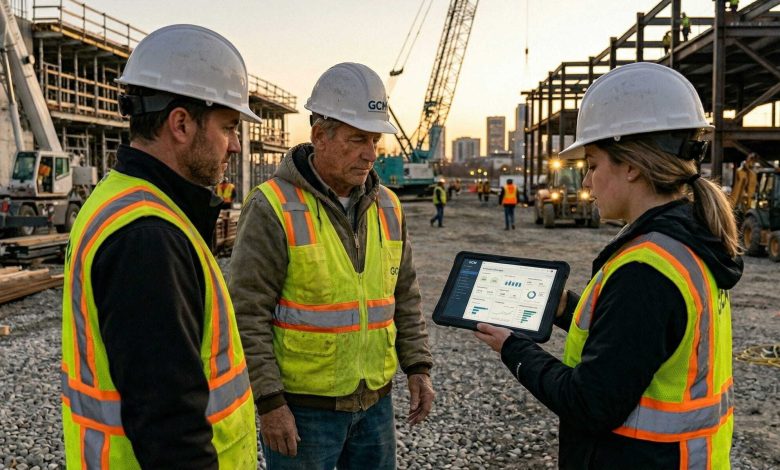
For decades, construction companies focused primarily on project acquisition, operational efficiency, and cost management to drive growth.
Today, a new factor is becoming just as important: workforce strategy.
Across the construction and infrastructure industries, labor availability is increasingly determining which companies can grow and which companies struggle to scale.
In many markets, finding qualified workers has become more difficult than finding new projects.
As a result, workforce planning is evolving from a support function into a strategic business advantage.
Demand Continues Outpacing Labor Supply
Construction activity remains strong across many sectors, including:
- Commercial construction
- Manufacturing
- Data centers
- Telecommunications
- Healthcare facilities
- Infrastructure modernization
At the same time, many contractors report ongoing difficulty hiring:
- Electricians
- Low-voltage technicians
- Fiber installers
- Structured cabling professionals
- Foremen
- Skilled laborers
This imbalance is creating operational pressure throughout the industry.
Projects require labor to move forward, and labor shortages can quickly impact timelines, budgets, and customer relationships.
Hiring Has Become More Complex
Today’s construction projects often require highly specialized skills.
Many infrastructure environments involve:
- Network infrastructure
- Data center deployments
- Security systems
- Fiber optic installations
- Smart building technologies
- Mission-critical operations
Finding candidates with relevant experience can be difficult, particularly in competitive labor markets.
Companies that rely solely on traditional recruiting methods often struggle to keep pace with project demand.
Workforce Quality Matters More Than Ever
Hiring challenges are not simply about finding workers.
They are about finding the right workers.
Poor hiring decisions can lead to:
- Project delays
- Reduced productivity
- Increased turnover
- Safety concerns
- Customer dissatisfaction
As labor markets tighten, companies are placing greater emphasis on workforce quality and candidate vetting.
The goal is no longer just filling positions.
The goal is building reliable teams capable of supporting long-term growth.
Workforce Flexibility Creates Operational Advantages
One reason many construction companies are reevaluating workforce strategy is the need for flexibility.
Project demand often fluctuates based on:
- Contract awards
- Seasonal activity
- Economic conditions
- Infrastructure investment
Businesses need workforce models capable of adapting to changing project requirements.
Organizations that can scale labor efficiently are often better positioned to pursue growth opportunities without creating unnecessary operational risk.
Specialized Staffing Is Becoming More Important
To address these challenges, many businesses are partnering with staffing firms that specialize in technical and infrastructure talent.
Companies such as Flex Tech focus specifically on workforce solutions for construction, low-voltage, telecommunications, electrical, and data center environments.
These partnerships help contractors access qualified talent more quickly while reducing the time and resources required for recruiting and screening.
For many businesses, staffing partnerships have become an important component of workforce strategy.
The Companies That Win Will Build Better Teams
Construction will always be a people-driven industry.
Technology may improve efficiency, but skilled workers remain essential to project execution.
As labor markets continue evolving, workforce strategy will likely become one of the most important differentiators between successful companies and their competitors.
Organizations that invest in recruiting, workforce development, retention, and staffing partnerships today may ultimately gain significant advantages in tomorrow’s infrastructure economy.
Because in a market where projects are abundant but labor is limited, the ability to build great teams may be the ultimate competitive advantage.