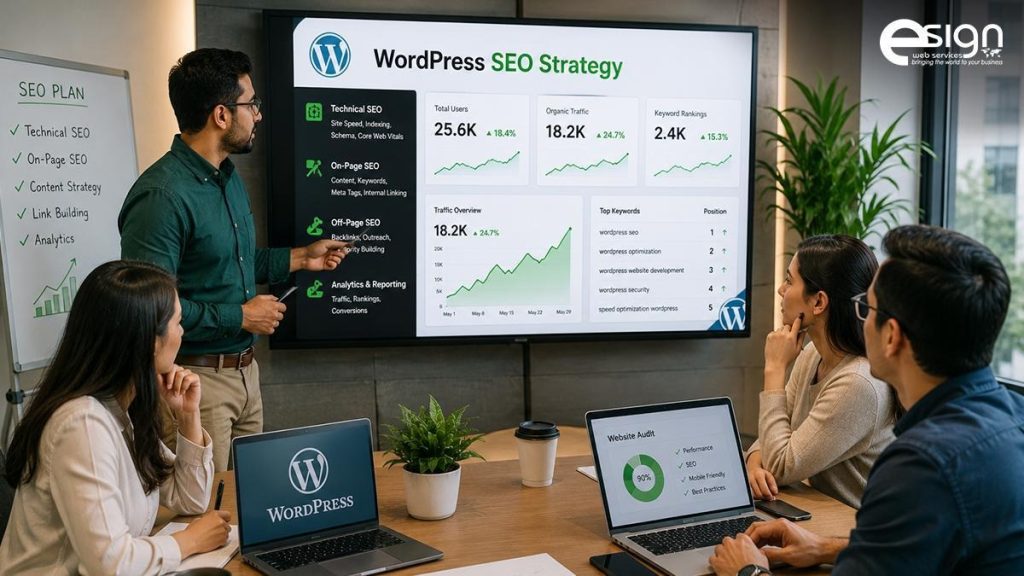
Key Points:
- WordPress visibility improves when structure stays clean as sites scale.
- Expert audits consolidate overlaps and stop pages competing for priority terms.
- Content clusters answer buyer questions and funnel readers to services.
- Stronger service pages clarify fit, proof, and next steps fast.
- Speed and indexing hygiene reduce crawl noise and ranking volatility.
- Internal linking and canonicals guide crawlers to the right URLs.
- Reporting tracks qualified sessions and conversions, not vanity rankings alone.
Growing businesses rarely lose search visibility overnight. It usually slips when the website expands faster than its structure: new services go live, old pages stay published, and the navigation slowly gets cluttered. Search engines then see mixed signals about what should rank, while real visitors feel slower load times and confusing paths to the right page. WordPress can scale extremely well, but only when the foundation stays organised, fast, intentional, and easy to understand for both humans and crawlers, across every device and location. When that base is shaky, even good content struggles to break through, because the site feels harder to trust.
In general, the purpose is not “more traffic”; it is more traffic of the right kind. The people who are already looking for their solution, their service, or their provider type, who have the intention to buy behind the query. Once the site is technically clean, the service pages are focused, and the content actually provides the answer, then SEO begins to compound. They are not so reliant on spikes or one-off high expenditure referrals, but they build a more consistent enquiry flow that enables better forecasting and growth planning, and they win the trust earlier in the buyer journey.
WordPress Expert SEO Audit That Removes Confusing Site Signals
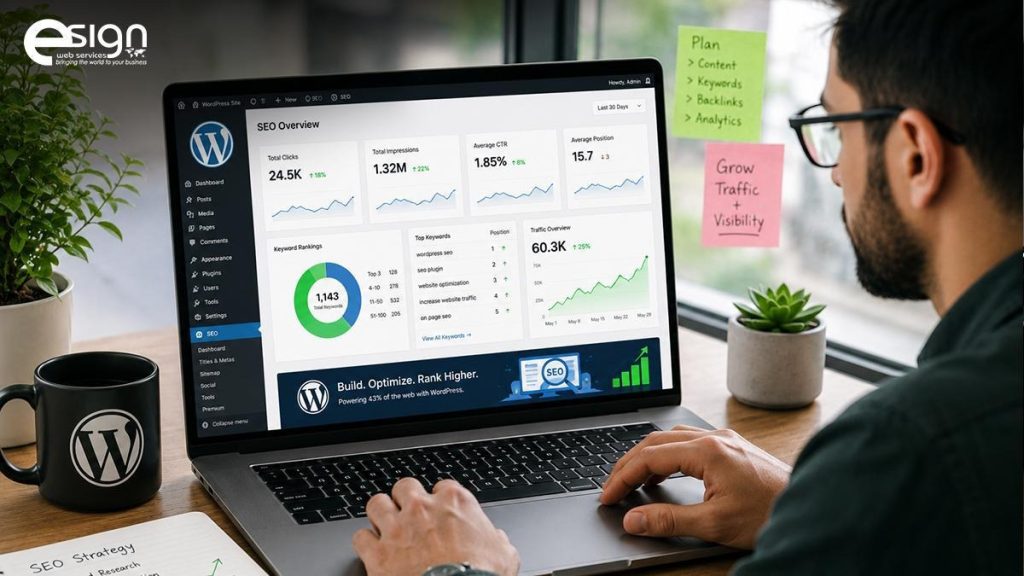
A WordPress SEO expert usually starts by finding the quiet issues that dilute relevance: overlapping pages, thin archives, duplicated topics, and confusing navigation paths. They consolidate what competes, strengthen what should lead, and ensure each core service has one clear “home” page. When internal links support that structure, crawlers waste less time, indexing improves, and the right pages get refreshed more reliably over time, even as teams publish more, for priority terms.
They also set guardrails so future updates do not recreate the same chaos. That can include consistent URL rules, controlled category usage, and a simple publishing checklist that tells the team when to improve an existing page versus creating a new one. These standards prevent keyword cannibalisation, keep authority concentrated, and make ongoing SEO easier to maintain as new offers and locations get added, without inflating unnecessary URLs, as they scale.
Content Clusters That Answer Buyer Questions with Depth
Competitive markets are rarely won with one-off blog posts. Clusters work better: one strong core page supported by focused articles that answer smaller, connected questions. Pricing drivers, timelines, switching risks, integration concerns, and common mistakes often attract visitors closer to a decision. When those articles link back to the relevant service page, they strengthen topical depth and create a natural path from research to enquiry, without forcing a hard sell.
Clusters also help teams publish with discipline instead of chasing random keywords. They build a library around core offers and update it as new questions appear in sales calls. Simple checklists, short examples, and clear comparison notes make content feel credible without overpromising. Over time, this structure turns the site into a research destination that serves multiple stakeholders, improves internal linking, and keeps authority compounding instead of fading across changing seasons.
WordPress SEO Pages That Turn Clicks into Calls
WordPress SEO services often create the fastest commercial lift when they improve the pages that already sell. A strong service page clarifies who the offer fits, what outcomes it supports, how delivery works, and what the next step is. When headings, proof points, and FAQs align, visitors stop guessing. They compare less, trust faster, and convert sooner because the page answers decision questions quickly and clearly, in a scannable flow.
Good service pages also support local and category-based discovery without sounding salesy. Clear location cues, clean internal links from related pages, and short “what to expect” sections reduce bounce and help buyers evaluate with confidence. Instead of broad promises, the page feels specific and useful. Over time, that specificity becomes a ranking advantage because search engines and humans both recognise intent, relevance, and stronger engagement signals, especially on mobile, in competitive markets.
Speed and Indexing Hygiene for Cleaner Crawl Paths
WordPress SEO services also protect visibility by keeping performance and indexing stable as the site expands. Practical fixes include image compression, caching, script cleanup, and trimming plugin weight so pages stay responsive on mobile. They reduce crawl noise by cleaning redirect chains and limiting low-value archives that steal attention from revenue pages. Faster, cleaner pages typically improve engagement, which supports rankings even before major content updates land consistently, across busy pages.
Indexing issues can quietly sabotage strong pages. Duplicate titles, inconsistent canonicals, and weak internal linking can push crawlers toward the wrong URLs. Cleaning those signals helps priority pages get discovered, refreshed, and ranked more predictably. With a tighter sitemap, sensible noindex rules, and clearer link pathways, the site becomes easier to crawl and easier to trust, even when competitors are publishing aggressively, and SERPs shift week to week, without false duplicates.
Reporting That Connects Visibility to Revenue Actions
A WordPress SEO expert keeps SEO manageable by tying reporting to outcomes, not vague vanity metrics. The most useful view tracks qualified sessions to priority pages, calls, or form fills by landing page, and the queries that bring late-stage visitors. Rankings can be context, but they are not the main proof. If visibility rises without lead quality, the strategy needs refinement, not celebration, and next steps should be clear for the team.
Reporting should also guide the next sprint with clear priorities. If a page earns clicks but few enquiries, the fix may be sharper positioning, stronger proof, or a more direct call to action. If a page converts well but lacks reach, it may need better internal links or more supporting content. This feedback loop prevents reactive changes and turns SEO into a steady process stakeholders can trust through normal ranking swings.
Conclusion
Business websites build stronger search visibility when WordPress stays technically clean, structurally organised, and aligned to buyer intent. Growing teams pull ahead by consolidating clutter, strengthening priority pages, and publishing content that answers real questions with specificity. These improvements compound over time: indexing stabilises, relevance becomes clearer, and more qualified visitors arrive ready to take the next step, because the site feels faster, clearer, and more trustworthy to real buyers.
eSign Web Services helps businesses turn WordPress SEO into an organised, measurable system. Their team focuses on technical cleanup, intent-led page improvements, and content planning that supports real buyer journeys. With clear deliverables and reporting tied to enquiries, companies can improve visibility without relying on short-term spikes, while keeping collaboration practical for busy teams and protecting long-term performance at scale. They keep updates transparent, so teams know what changed and why.
Frequently Asked Questions
Question: What should a business fix first on a growing WordPress site?
Answer: Start with revenue pages and site speed. Clean duplicate URLs, tighten headings, and make the next step obvious. Then strengthen internal links so each core service has one clear home page. These fixes reduce crawl confusion and often improve conversions quickly.
Question: How long does it take to see SEO movement on WordPress?
Answer: Many sites notice early changes in 8–12 weeks after key technical and on-page fixes. Stronger gains often build over 3–6 months as content clusters mature and authority strengthens. Progress should be judged by qualified enquiries, not rankings alone.
Question: Can existing pages be improved instead of writing new ones?
Answer: Yes. Updating strong pages often beats starting from scratch. Improve structure, expand FAQs, add proof points, and refresh internal links. New content works best when it supports priority pages and answers specific buyer questions with purchase intent.
Question: Why do WordPress sites sometimes struggle with indexing?
Answer: Common causes include duplicate titles, messy archives, inconsistent canonicals, and weak internal linking. Search engines can then prioritise the wrong URLs or refresh pages unpredictably. Cleaning the structure and tightening signals usually stabilises indexing over time.
Question: What metrics matter most for proving SEO is working?
Answer: Track qualified sessions to priority pages, calls and form fills from organic traffic, and conversion rate by landing page. Rankings help with context, but lead quality matters more. Reporting should explain what changed, why it mattered, and what happens next.