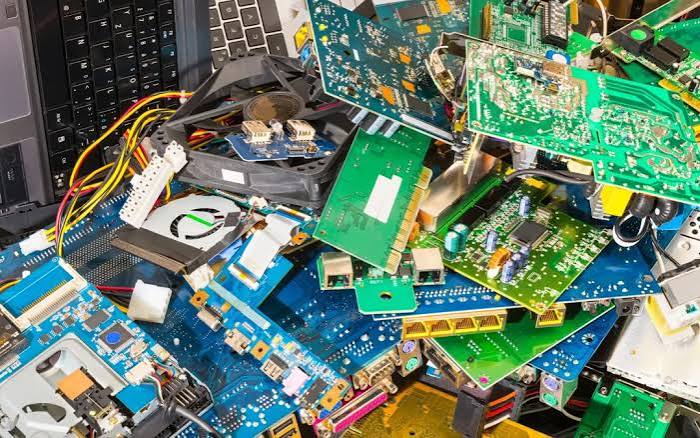
It’s easy to underestimate how much environmental weight sits quietly in a drawer full of old phone chargers and a dead laptop in the closet. Multiply that single household by millions, and the numbers behind e-waste environmental impact start to look far larger than most people ever imagine, making electronics one of the fastest-growing categories of waste in the world today.
Why Electronics Are Different From Ordinary Trash
A banana peel breaks down naturally over time. A circuit board does not. Electronics combine plastics, metals, and chemical compounds in ways that don’t decompose safely, and many contain materials like lead, mercury, or flame retardants that can leach into soil and water if simply buried in a landfill alongside regular household waste.
Why Awareness Alone Doesn’t Solve the Problem
Most people already know, at least in a general sense, that electronics shouldn’t go in the regular trash. Yet the gap between that awareness and actual behavior remains significant, partly because recycling electronics requires a bit more effort than tossing something in a curbside bin. Understanding this gap is important, since the solution isn’t more awareness campaigns alone but making the actual process of recycling as frictionless as possible for the average household.
Retailers and manufacturers who make take-back programs genuinely convenient, rather than burying the option deep in a website, tend to see meaningfully higher participation than those who simply mention recycling as an afterthought in their sustainability messaging.
The Scale of the Problem
Global e-waste generation has climbed steadily for years, driven by shorter device lifespans and a growing appetite for the latest gadget. Much of this discarded electronics never makes it to a proper recycling facility, instead ending up in landfills or, in some cases, shipped informally to regions with far less oversight over how the material is handled.
What Happens When E-Waste Goes to a Landfill
Once buried, electronics slowly break down under conditions nobody can fully control. Rainwater moving through a landfill can pick up trace amounts of heavy metals and carry them into surrounding soil and groundwater, a process that can continue for decades after the original device was thrown away and largely forgotten.
The Hidden Cost of Wasted Materials
Beyond the contamination risk, landfilling electronics wastes genuinely valuable material. A single device can contain small but meaningful amounts of copper, aluminum, and even precious metals like gold and silver. Mining these materials fresh from the earth carries its own significant environmental footprint, including habitat disruption and substantial energy use, footprint that responsible recycling helps avoid by recovering what’s already been extracted and refined once already.
How Proper Recycling Changes the Equation
When electronics move through a certified recycling process instead of a landfill, materials get separated, hazardous components handled safely, and recoverable metals and plastics returned to manufacturing supply chains. This closed-loop approach reduces the need for new raw material extraction while also keeping toxic substances out of the environment where they’d otherwise sit indefinitely.
The Role Individuals Actually Play
It’s tempting to think individual choices barely register against a global problem this size, but collective household behavior is exactly what drives the volume of unrecycled e-waste in the first place. A single person recycling their old phone rather than tossing it in the trash contributes a small, genuinely measurable difference, and that behavior multiplied across entire communities adds up to real environmental impact over time.
Simple Habits That Actually Help
Setting a habit of recycling electronics as soon as they’re replaced, rather than letting them accumulate in a drawer for years, keeps the process manageable and prevents devices from being forgotten entirely. Checking whether a retailer or manufacturer offers a take-back program when purchasing a new device is another simple step that builds responsible disposal directly into the upgrade process itself.
Why Awareness Days Still Matter
Dedicated recycling awareness campaigns exist precisely because e-waste remains an underappreciated problem compared to more visible waste categories like plastic packaging. These campaigns serve as a useful annual reminder to check that drawer, empty out old devices responsibly, and reconsider habits that might otherwise let electronics quietly pile up unaddressed for years at a time.
Communities that pair these awareness days with an actual local collection event tend to see far better results than those relying on messaging alone, since giving people a specific date and location to act on turns a vague good intention into a concrete task that actually gets done.
Final Thoughts
The environmental impact of e-waste isn’t abstract or distant, it’s sitting in millions of drawers and closets right now, representing both a contamination risk and a missed opportunity for material recovery. Taking the small, manageable step of recycling electronics properly, rather than letting them pile up or end up in the regular trash, is one of the more meaningful everyday choices available to reduce this growing environmental burden.