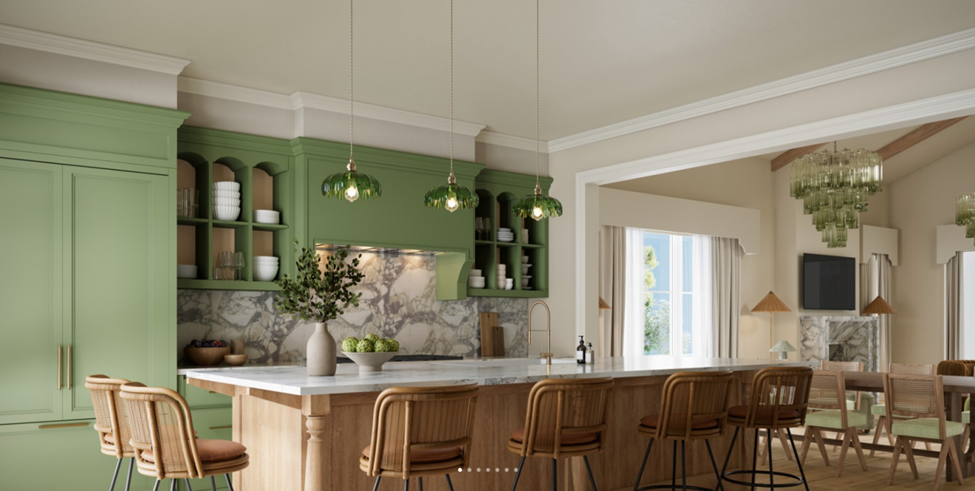
Golf developments do not sell a course. They sell a version of someone’s life and identity that comes with it: coffee on a terrace before a morning round, a walk to the clubhouse at dusk, guests arriving for dinner with the fairway going gold behind them. What moves a buyer, in the end, is the picture of themselves experiencing the nature, slow lifestyle it gives and exclusive identity it creates.
This is precisely the gap that architectural renderings and animations are designed to bridge. Render Art Studio understands how to bring unbuilt environments to life through compelling visual storytelling, particularly through its work on golf course developments for leading developers such as The Cabot Collection.
A site plan shows where a fairway runs and where a villa sits. It cannot show what it feels like to be there. Long before a single tee box is shaped, a lifestyle-driven rendering can put a buyer inside that future morning, and that emotional head start is often what separates a golf development that sells out early from one that sits on the market waiting for the landscaping to mature.
Why Golf Communities Need A Different Kind Of 3D Visualization
Golf real estate carries a specific promise: privacy, low density, and a slower rhythm of life, often aimed at buyers who never intended to touch a club. Generic exterior rendering can show the landscape and architecture. It cannot show the promise. A visualization built around lifestyle and storytelling can, by placing real human moments, golden hours light, friends walking off the eighteenth, into a scene tied to that particular property rather than to golf resorts in general.
Matching Golf Links Visualization To The Story A Golf Development Needs To Tell
| Visualization Type | Best Used For | What It Should Give |
| Aerial renderings | Master-planned golf communities | Awe experience: scale, course routing, and those landscapes! |
| Exterior renderings and eye-level visualizations | Entrances and clubhouse approach | Human lifestyle experience: arrival and curb appeal, melting into landscape, feeling of light and nature |
| Interior renderings | Show villas and clubhouse interiors | Daily life, light, texture, materials |
| Animations flythroughs | Sales launches, investor presentations | Immersive experience: movement through the property, sense of place over time. Gives the motion, the sounds of nature in the background and allows investors to dive into the unbuilt. |
The Clubhouse Renderings Sells As Much As The Luxury Villa
Shared spaces such as clubhouses, practice greens, and the paths connecting them to the homes often carry more selling weight than the residences themselves. Public space visualization around these areas answers a question every buyer is quietly asking: who else will be here, and what will it feel like to belong to this place. A course rendered beautifully but shown empty of life rarely closes a sale on its own.
Golf Course Animation As The Missing Layer
Static images present a golf development as shots. Animation lets a buyer move through it, following a path from the entrance road past the ninth green to a villa terrace at golden hour. That sense of movement over time does something a still rendering cannot: it turns a collection of buildings, fairways and holes into a place with a rhythm, which is closer to how a home, slow luxury and leisure activities are experienced day to day.
Designing Golf Experience Renderings That Sell A Feeling, Not A Floor Plan
A golf development sells years before construction finishes, which means the rendering has to do work the site cannot yet do itself. Anyone can produce a photorealistic image of a residence next to a landscape and course. Few studios add the layer that convinces people to invest in it: the right hour of light, a small human detail, a scene specific enough to that address that it could never pass for a stock image of some other resort.
Render Art Studio treats these projects like a lifestyle portrait rather than a technical drawing. They start with a high-end photorealistic base, then build a target buyer’s identity around it and a storytelling layer on top of it, so the image sells not the course, but the feeling of a life beside it. For developers, architects, and real estate professionals working on golf communities anywhere in the world, that layer is often the difference between a rendering that documents a property and one that sells a life worth investing in.