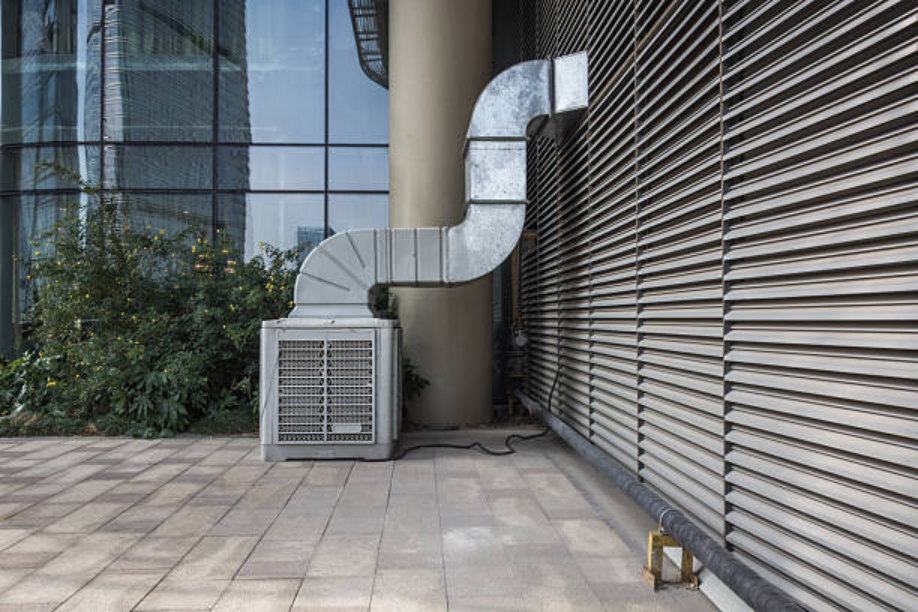
Large industrial facilities require cooling solutions that balance effectiveness with operational economics. Ducted evaporative coolers have become the preferred choice for facility managers seeking powerful, cost-efficient cooling for expansive work areas. These sophisticated systems deliver consistent temperature control across vast square footage while consuming a fraction of the energy traditional air conditioning demands.
How Ducted Evaporative Coolers Work
Ducted evaporative coolers harness the natural principle of evaporative cooling—the same process that cools your skin when perspiration evaporates. These systems draw fresh outdoor air through water-saturated cooling pads where rapid evaporation occurs, significantly lowering air temperature. The cooled air is then distributed throughout the facility via a strategically designed duct network, ensuring even temperature distribution.
Unlike portable units, ducted evaporative coolers are installed as permanent fixtures, typically roof-mounted, with ductwork routed to deliver cooling where most needed. This comprehensive approach makes them particularly suitable for large-scale industrial operations requiring whole-facility climate control.
Industrial Cooling Challenges Solved
Shop floors and warehouses present formidable cooling challenges. These facilities often feature extremely high ceilings creating massive air volumes, minimal insulation in older structures, large overhead doors frequently opened for material handling, and heat-generating equipment that creates localized hot zones.
Traditional HVAC systems attempting to cool these enormous volumes quickly become prohibitively expensive to install and operate. Ducted evaporative coolers solve this dilemma by providing effective cooling at a fraction of the cost, making comfortable working conditions achievable even for operations with constrained budgets.
Exceptional Energy Efficiency
The most compelling advantage of ducted evaporative coolers is their remarkable energy efficiency, consuming approximately 75-80% less electricity than comparable refrigerated air conditioning systems. For industrial facilities running cooling equipment throughout long shifts, this efficiency translates into substantial monthly utility savings.
The efficiency stems from simple mechanical design using only fan motors and water circulation pumps, eliminating energy-intensive compressors. This simplicity reduces operating costs, minimizes maintenance requirements, and extends equipment lifespan. For a typical 50,000 square foot warehouse, energy savings can exceed thousands of dollars monthly during peak seasons.
Superior Air Quality Through Continuous Ventilation
Ducted evaporative coolers continuously introduce 100% fresh outdoor air into facilities, unlike recirculating air conditioning systems. This constant air exchange creates healthier working environments by removing stale air, reducing contaminants, eliminating industrial odors, and maintaining adequate oxygen levels.
Industrial operations often generate fumes, dust, or airborne particles. The continuous fresh air supply helps maintain safe air quality standards, supporting worker health and regulatory compliance.
Effective Coverage for Expansive Areas
The ducted distribution system allows ducted evaporative coolers to deliver consistent cooling across extensive square footage. Strategic duct placement ensures every section of the shop floor or warehouse receives adequate airflow, eliminating hot spots and creating uniform temperature conditions.
Modern ducted evaporative coolers can be configured with multiple discharge points, allowing customization of airflow patterns to match specific facility layouts and cooling requirements. This flexibility ensures optimal performance regardless of building configuration or operational needs.
Low Installation and Maintenance Costs
Compared to industrial-scale refrigerated air conditioning, ducted evaporative coolers offer significantly lower installation costs. The equipment costs less, and installation requires basic ductwork and electrical connections rather than complex refrigeration systems.
Maintenance remains minimal and can be handled by in-house facilities teams. Regular tasks include cleaning or replacing cooling pads, checking water systems, and inspecting fans. Annual maintenance costs typically run 30-50% less than comparable air conditioning systems.
Ideal Applications for Maximum Benefit
Manufacturing Shop Floors
Manufacturing facilities benefit tremendously from ducted evaporative coolers. Production areas with heat-generating equipment, welding operations, metalworking machinery, and assembly lines create challenging thermal environments. Ducted evaporative coolers maintain comfortable temperatures that support worker productivity and reduce heat-related safety concerns.
The fresh air circulation also helps remove industrial odors and airborne particles generated during manufacturing processes, creating healthier working conditions.
Warehouses and Distribution Centers
Warehouses represent perfect candidates for ducted evaporative coolers. These facilities typically feature vast open spaces with high ceilings where traditional air conditioning becomes economically impractical. Workers in picking, packing, and sorting areas perform physically demanding tasks, making effective cooling essential for maintaining productivity and safety.
Loading dock areas that frequently have doors open to the outdoors particularly benefit from ducted evaporative coolers. Unlike air conditioning systems that struggle with constant outdoor air exchange, evaporative cooling works efficiently even in semi-open environments.
Climate Considerations for Optimal Performance
Ducted evaporative coolers perform optimally in dry climates with low relative humidity. The evaporative cooling process works most efficiently when outdoor humidity levels remain below 50-60%. Regions with hot, dry summers see the greatest benefits from these systems.
In more humid climates, cooling effectiveness decreases as air moisture content increases. However, even in moderate humidity, ducted evaporative coolers provide valuable ventilation and moderate cooling, making them worthwhile for facilities prioritizing air quality.
Optimizing System Performance
Proper system design maximizes ducted evaporative cooler effectiveness. Adequate ventilation openings allow cooled air to escape, preventing pressure buildup that reduces airflow and cooling efficiency. The general rule provides exhaust area equal to approximately twice the total duct discharge area.
Duct placement should consider workflow patterns and heat sources within facilities. Directing cooled air toward work areas and heat-generating equipment ensures maximum benefit for workers and processes requiring temperature control.
Regular maintenance preserves peak performance. Cooling pads should be inspected monthly during cooling seasons and replaced annually or when showing deterioration signs. Water systems require periodic cleaning to prevent mineral buildup and maintain optimal water distribution across cooling pads.
Conclusion
Ducted evaporative coolers from Arctic represent an ideal cooling solution for large industrial spaces like shop floors and warehouses. Their combination of exceptional energy efficiency, superior air quality through continuous fresh air supply, effective coverage across expansive areas, and low operating costs makes them the smart choice for facilities seeking to balance worker comfort with operational budgets. For facilities in appropriate climates, these systems deliver unmatched value in industrial cooling applications.